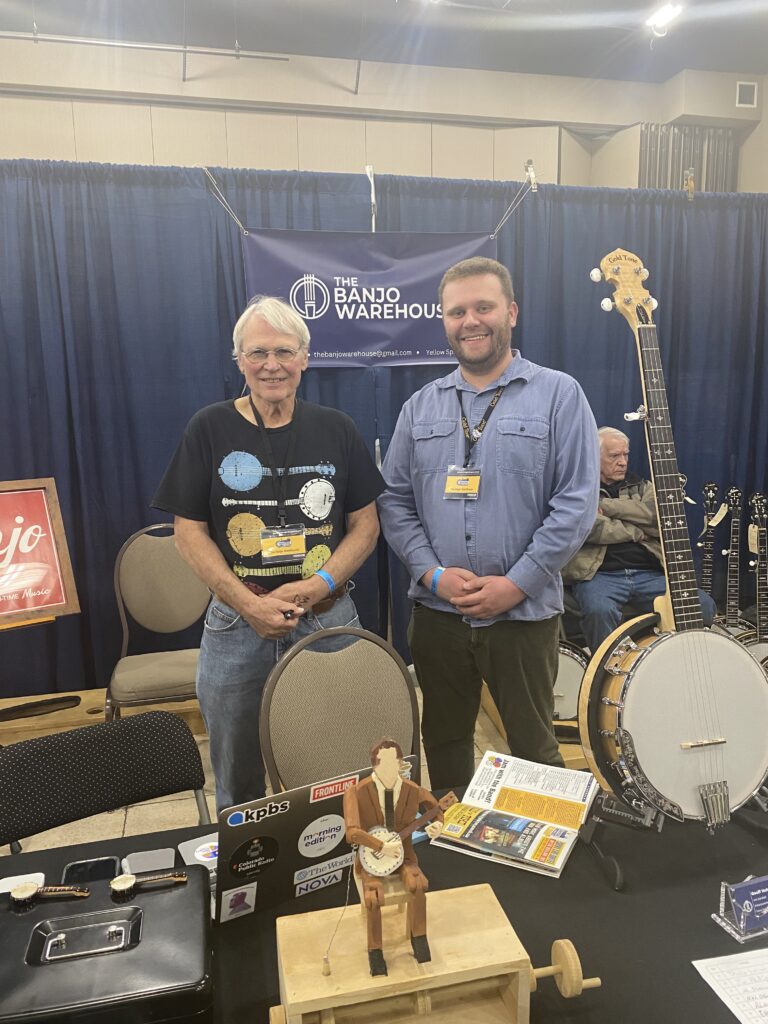
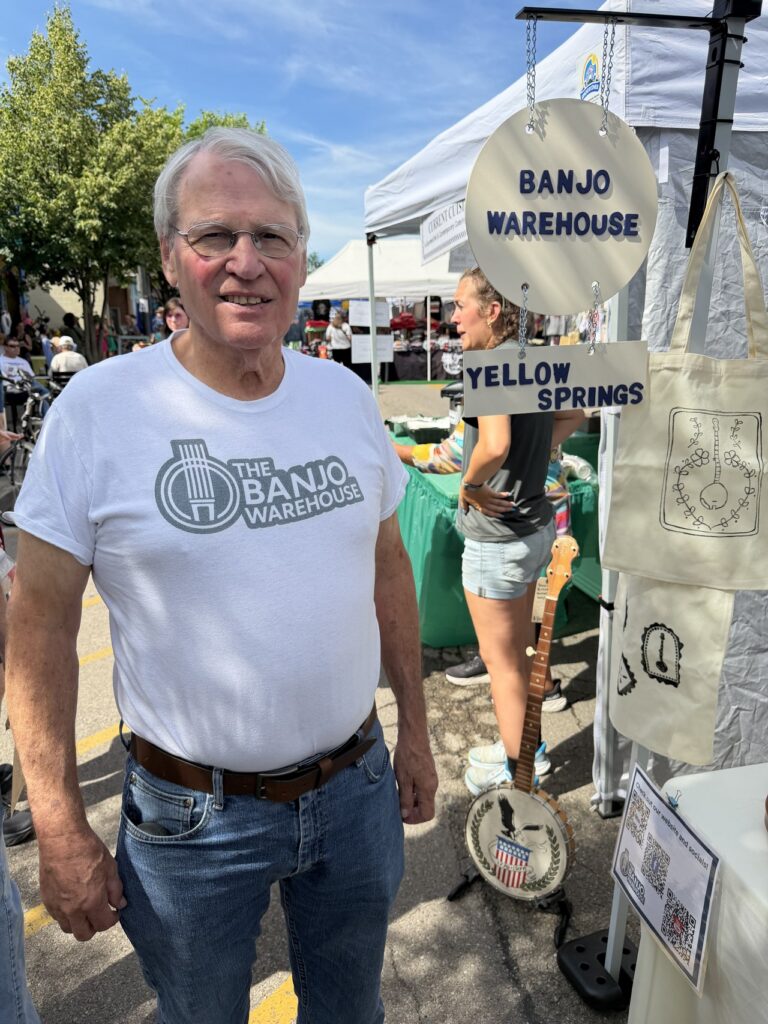
Geoff Hohwald
OwnerGeoff Hohwald has played banjo since 1963 and has been buying and selling banjos since 1977. He started in Columbus, Ohio, which was a hotbed of bluegrass at the time, studying banjo under John Hickman and Robby Robinson. In Columbus, Geoff played with some of the most important musicians in bluegrass history, including Bill Monroe’s last two guitar players Tom Ewing and Wayne Lewis, along with Red Allen, Sandy Rothman, Sid Campbell, Dave Evans, Frank Wakefield, Hylo Brown, Buddy Thomas, The Fields Brothers, Landon Messer, Earl Taylor, and Brian Aldridge.
Read Geoff’s full story
Before moving back to Ohio, Geoff spent 50 years in Georgia as a working musician. He played with Bear Creek, performed at the Alliance Theatre in The Robber Bridegroom, played with the Atlanta Pops Orchestra, and is a founding member of the Greater Atlanta Bluegrass Band. He opened his first music store in 1977 and has been a full-time banjo dealer and teacher ever since. Banjo Warehouse has one location, in Yellow Springs, Ohio.
Geoff is the author of The Banjo Primer, which has sold over 200,000 copies and is one of the best-selling beginner banjo methods. He’s also written Intro to Banjo Rhythm & Backup, Banjo Backup Licks & Rolls, Classic Banjo Backup, and a series of improvisation books that are used by banjo teachers worldwide.
He has taught at the Frank Hamilton School, Georgia Pick and Bow in Dahlonega, Georgia, and founded the Scruggs-style banjo clinic at the John C. Campbell Folk School. He now teaches lessons from his home in Yellow Springs, Ohio.
His relationships in the industry run deep. Geoff collaborated with Gold Tone founder Wayne Rogers on the design of the OB-12 Top Tension banjo (alongside Greg Rich) and the OB-Standard. He has known Greg and Janet Deering for over 45 years and once served as Deering’s largest distributor nationally. He has owned dozens of original five-string prewar flathead Gibson banjos.
When you call Banjo Warehouse, you’re talking to someone who can tell you exactly how a 1932 Gibson flathead compares to a modern Huber, and why that matters for the music you want to play. That’s not something you get from a big-box retailer.