
Gibson Mastertone Banjos — Prewar Flatheads, Postwar Models, and Tenor Conversions
Prewar Gibson flathead Mastertones with one-piece flanges and original tone rings built in Kalamazoo, Michigan are the holy grail of bluegrass banjos. The Mastertone name represents Gibson’s professional banjo line, featuring the tone ring construction that defined the bluegrass sound. Gibson stopped making banjos in 2010. Available at Banjo Warehouse in Yellow Springs, Ohio.
Earl Scruggs played RB-Granada #9584-3, a 1930 flathead Granada — the most famous banjo in bluegrass history.
Banjo Warehouse stocks vintage Gibson Mastertones, reissue Gibsons, and prewar tenor and plectrum conversions when we find quality instruments. Owner Geoff Hohwald has over 50 years of experience evaluating and selling Gibson banjos. Every Gibson we sell is professionally inspected and set up by our banjo tech Tara.
Call Geoff at (404) 218-8580 to discuss Gibson Mastertone inventory or to have your Gibson evaluated.
Watch: Gibson Mastertone Banjos
Prewar Gibson (1929-1942)
Postwar Gibson (1945-1984)
Reissue Gibson and Signature Models (1987-2010)
Other Gibson Models
Understanding Gibson Mastertone Models
Gibson used a model numbering system based on price point and appointments. The Style 3 (RB-3, TB-3, PB-3) was the entry-level Mastertone with nickel hardware and mahogany construction — and according to documented serial number analysis, Style 3 and Style 75 banjos make up the vast majority of surviving prewar flatheads. The Style 4 (RB-4, TB-4) added figured wood and fancier appointments. The Style 6 was a highly ornate Mastertone with elaborate figured maple and gold sparkle binding. The Granada (RB-Granada, TB-Granada) was the top-of-the-line Mastertone with gold hardware, elaborate Hearts & Flowers inlays, and the finest materials. The Style 75 (RB-75, TB-75) was a professional model positioned between the Style 3 and Style 4 — Gibson renamed the Style 3 to Style 75 in August 1937, dropping the price from $100 to $75.
The prefix indicates string configuration: RB = Regular Banjo (5-string), TB = Tenor Banjo (4-string), PB = Plectrum Banjo (4-string). Because Gibson built far more tenors and plectrums than 5-strings in the prewar era, many vintage prewar 5-string banjos today are conversions from tenor or plectrum originals.
Non-Mastertone Models
Gibson also produced non-Mastertone banjos without the heavy cast tone rings. The Style 00 (introduced ~1935) was the least expensive Gibson banjo, with a half-inch rim, no tone ring, and silkscreened logo. The Style 1 had no tone ring — just a brass hoop — but featured a full-thickness rim that can be cut to accept a flathead ring for conversion. The Style 2 featured walnut construction and could have a “pyramid” tone ring. The Style 11 (also called “double 1”) featured pearloid fingerboard and resonator back with silkscreened floral patterns — flashy stage instruments that make excellent conversion candidates because they have the same one-piece flange construction as Mastertones.
Gibson Top Tension Models
Gibson’s top tension banjos — the RB-7, RB-12, and RB-18 — feature a unique design where the head tension is adjusted from the top of the rim rather than underneath. This allows for easier head changes and adjustment without removing the resonator. Prewar top tension models were produced from 1937 to around 1942. They typically command premium prices for their rarity, distinctive Art Deco styling, and massive sustain. The RB-18 was the top-of-the-line top tension model with the most elaborate appointments.
Gibson reissued the top tension models from 1995 to 2008. These reissues are faithful reproductions with the same heavy hardware and distinctive resonator construction.
Prewar Gibson Flatheads (1929-1942)
Prewar Gibson flathead Mastertones with one-piece flanges built in Kalamazoo, Michigan are the holy grail of bluegrass banjos. The flathead tone ring — introduced in 1929 — produces the bright, cutting tone that defined the bluegrass sound. Earl Scruggs, J.D. Crowe, Sonny Osborne, and virtually every bluegrass legend played prewar Gibson flatheads. These rare banjos were chosen by the pioneers of bluegrass music in the late 1940s and 1950s, most likely due to the volume and driving tone they produce with three-finger picking style.
Original prewar 5-string flatheads are extremely rare and command prices from $75,000 to over $300,000 for documented instruments. For most players, prewar tenor or plectrum conversions offer authentic prewar tone — original rim, original flange — with a modern 5-string neck, at a fraction of the cost. (The original tone ring typically stays with the conversion; original loose prewar flathead tone rings alone can cost around $25,000.) Conversion prices range from approximately $3,000 to $20,000 depending on the quality of the neck builder, condition, and originality of parts.
In short: Gibson Mastertone banjos define the bluegrass sound — prewar flatheads are the holy grail, postwar models offer professional tone at lower prices, and prewar conversions deliver authentic vintage sound with modern playability.
Understanding Prewar Serial Numbers
Gibson serial numbers provide valuable information for dating and authenticating prewar banjos. The 8XXX series (approximately 1925-1926) includes the first Mastertones, from ball bearing models through 40-hole archtops — the peak of the Jazz era and peak banjo production. The 9XXX series (approximately 1927-1929) marks the introduction of the one-piece flange and flathead tone ring. The 1X and up series (approximately 1931 through the end of prewar production) are documented in Gibson’s hand-written shipping ledgers that survive to this day.
If you are considering the purchase of a vintage Gibson banjo, the serial number is essential for validating authenticity and establishing provenance. All prewar Gibson banjos Style 1 and higher had serial numbers stamped inside the rim (with some exceptions in the very late 1939-1942 period). A banjo presented without a serial number — or with a serial number that doesn’t match documented records — warrants careful examination.
Prewar Archtop vs. Flathead
Before the flathead tone ring became standard, Gibson built banjos with archtop (raised-head) tone rings. Archtop banjos have a different tonal character — warmer, with more midrange and less of the bright cutting edge of flatheads. Many early prewar conversions use archtop tone rings. Both archtop and flathead prewar Gibsons are valuable, but flatheads command the highest prices among bluegrass players.
The 1950s postwar archtop rings were the same dimension as prewar versions, but Gibson drilled only four holes in them instead of the original configuration.
Prewar Tenor and Plectrum Conversions
Because Gibson built many more tenor and plectrum banjos than 5-strings in the 1920s and 1930s, conversion banjos have become an important part of the market. A conversion starts with an original prewar Gibson pot assembly — rim, tone ring, flange, hardware — and adds a modern 5-string neck built to period specifications.
Quality conversions use necks from respected builders like Frank Neat, Steve Huber, Don Bryant, and others. The value proposition is clear: authentic prewar sound without the six-figure price of an original 5-string. Conversion pricing depends on the originality of parts, quality of the neck, and overall condition. Both tenor conversions (from TB models) and plectrum conversions (from PB models) are common — the pot assemblies are identical, only the original neck scale length differed.
Postwar Gibson (1945-1984)
After World War II, Gibson resumed banjo production but with significant changes. The postwar era can be divided into several periods. The Kalamazoo postwar era (1945-1958) produced models like the RB-100 and RB-150 — non-Mastertone banjos without flathead tone rings but with solid construction and good playability. The bowtie era (1948-1968) refers to the distinctive bowtie inlay on models like the RB-150. These postwar bowties often featured Brazilian rosewood fingerboards, and some had full-thickness rims while others had the thin half-inch rims where the flathead tone ring hung over the inside edge of the rim. The flathead revival (1959-1984) saw Gibson return to flathead tone rings on Mastertone models like the RB-250 and RB-800.
Postwar Gibsons from the 1960s-1980s offer professional-grade tone at prices far below prewar instruments. Models like the RB-250 and RB-800 from this era are excellent playing banjos with genuine Gibson Mastertone construction.
Reissue Gibson and Signature Models (1987-2010)
Gibson banjos based on prewar models from 1987 forward are called reissue Gibsons. The Earl Scruggs Standard and Earl Scruggs Golden Deluxe are professional-grade instruments with flathead tone rings and quality construction. The J.D. Crowe RB-75 is a signature model based on Crowe’s legendary prewar RB-75. Gibson quality has varied across different ownership periods and production facilities — have any Gibson evaluated by an expert before purchasing. Gibson stopped making banjos in 2010.
The Greg Rich Era (1987-1993)
During the late 1980s and early 1990s, Greg Rich managed Gibson’s banjo production in Nashville. Banjos from this period — often called “Rich-era” Gibsons — are known for high-quality construction and excellent tone. Granada models from this era are particularly sought after.
Why Buy Gibson from Banjo Warehouse?
Banjo Warehouse specializes in vintage and used Gibson Mastertone banjos. Owner Geoff Hohwald has over 50 years of experience buying, selling, and evaluating Gibson banjos. Every Gibson we sell is thoroughly inspected for originality, condition, and playability. Our banjo tech Tara provides a professional setup on every instrument.
Selling a Gibson? We buy quality Gibson Mastertones outright or accept them on consignment. Call Geoff for a fair evaluation.
Want to know when new banjos arrive? Join our email list →
Frequently Asked Questions
What is a Gibson Mastertone?
Mastertone is Gibson’s professional banjo line, introduced in 1925. The name refers to banjos built with tone ring construction — the metal ring that sits on top of the wooden rim and supports the head. Mastertone banjos produce the bright, cutting tone that defined bluegrass music.
What is a prewar Gibson flathead?
A prewar Gibson flathead is a Mastertone banjo built in Kalamazoo, Michigan between approximately 1929-1942 with a flathead tone ring and one-piece flange. The flathead tone ring produces the bright, punchy tone that Earl Scruggs and other bluegrass pioneers made famous. Original prewar 5-string flatheads are extremely rare and valuable.
What is a Gibson tenor conversion?
A conversion is a prewar Gibson tenor or plectrum banjo that has been fitted with a modern 5-string neck. Because Gibson built many more tenors and plectrums than 5-strings in the prewar era, conversions offer authentic prewar tone — original rim and flange — with a playable 5-string neck, at a fraction of the cost of original 5-strings.
How much is a prewar Gibson flathead worth?
Original prewar Gibson 5-string flatheads typically sell for $75,000 to over $300,000 depending on model, condition, and documentation. Granada flatheads command the highest prices. Prewar tenor or plectrum conversions with quality necks typically sell for $3,000-$20,000 depending on the originality of parts and quality of the conversion.
What is the difference between RB, TB, and PB?
Gibson’s model prefixes indicate string configuration. RB = Regular Banjo (5-string). TB = Tenor Banjo (4-string, shorter scale). PB = Plectrum Banjo (4-string, longer scale). The number following the prefix indicates the style level — Style 3, Style 4, Style 75, Granada.
What is a bowtie banjo?
Bowtie refers to Gibson banjos from approximately 1948-1968 with a distinctive bowtie-shaped fingerboard inlay. Models like the RB-150 from this era are non-Mastertone instruments — they lack flathead tone rings — but offer solid construction and are often used as platforms for upgrades.
What is a reissue Gibson?
Gibson banjos based on prewar models from 1987 forward are called reissue Gibsons. This includes the Greg Rich era (1987-1993) and subsequent production through 2010, when Gibson stopped making banjos. Reissue models include the Earl Scruggs Standard, Earl Scruggs Golden Deluxe, and J.D. Crowe RB-75.
What is a Gibson top tension banjo?
Gibson’s top tension banjos (RB-7, RB-12, RB-18) feature head tension adjustment from the top of the rim rather than underneath. This design allows easier head changes without removing the resonator. Prewar top tension models (1937-1942) are known for their distinctive Art Deco styling, massive sustain, and rarity. Gibson reissued them from 1995-2008.
What is a Gibson Style 11?
The Style 11 (also called “double 1”) is a non-Mastertone Gibson banjo with pearloid fingerboard and resonator back featuring silkscreened floral patterns. Despite lacking a Mastertone tone ring, Style 11s share the same one-piece flange construction as Mastertones, making them excellent conversion candidates. Earl Scruggs played an RB-11 before acquiring his Granada.
What is a Gibson Style 1 conversion?
A Style 1 conversion is a prewar Gibson RB-1 or TB-1 that has been fitted with a flathead tone ring. Original Style 1 banjos had no tone ring — just a brass hoop — but featured full-thickness rims that can be cut to accept a flathead ring. Style 1 conversions offer authentic prewar Gibson construction at lower prices than converted Mastertones.
Why is the serial number important on a vintage Gibson?
The serial number helps validate authenticity and establish provenance. You can cross-reference documented serial numbers to verify if the banjo matches known records for that style and time period. If a seller will not reveal the serial number, that’s a warning sign — there is no legitimate reason to withhold it.
Contact Banjo Warehouse
Looking for a Gibson Mastertone? Call Geoff Hohwald at (404) 218-8580 or email thebanjowarehouse@gmail.com.
Follow Banjo Warehouse:
- Facebook – Join our community
- Reverb – Shop our listings
- eBay – Find rare instruments
- YouTube – Watch demos and lessons
Want to visit? Call Geoff to schedule an appointment at our Yellow Springs, OH or Atlanta, GA locations.
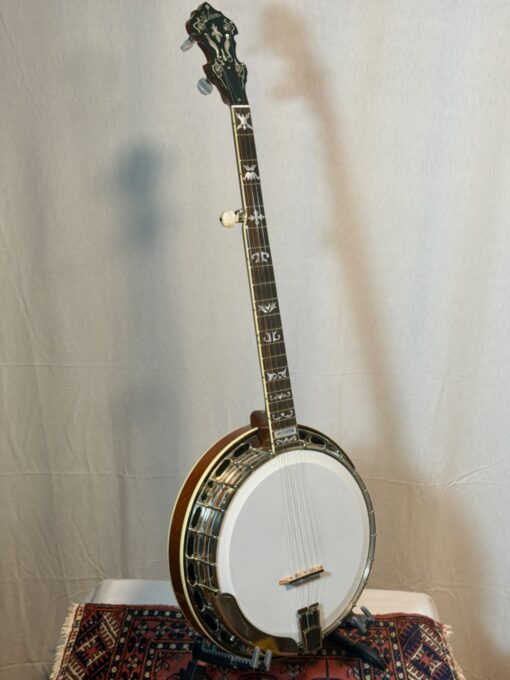
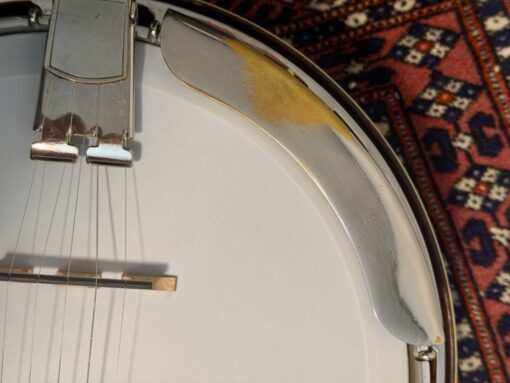
1932 Gibson TB-3 Mastertone with original one-piece flange and raised-head tone ring. Converted to 5-string by Frank Neat with mahogany neck and flying eagle inlays. All original hardware and resonator. Professional setup. Free shipping. 7-day guarantee.
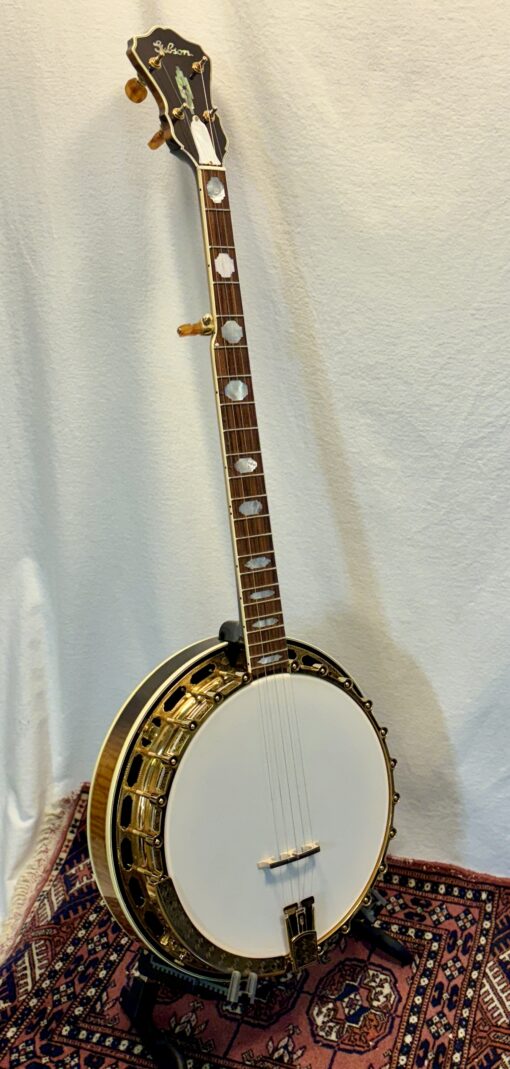
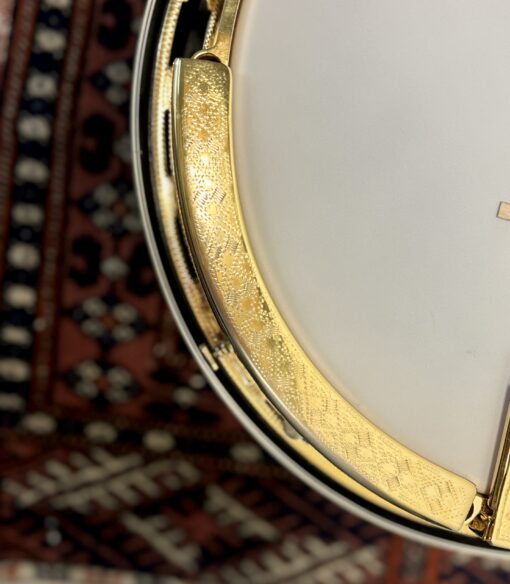
2005 Gibson RB-18 Top Tension Mastertone with 20-hole Kulesh tone ring, Art Deco inlays, dished flamed maple resonator, and gold hardware. Serial 90507-18. Excellent condition. Includes original case, head-tightening key, and warranty paper.

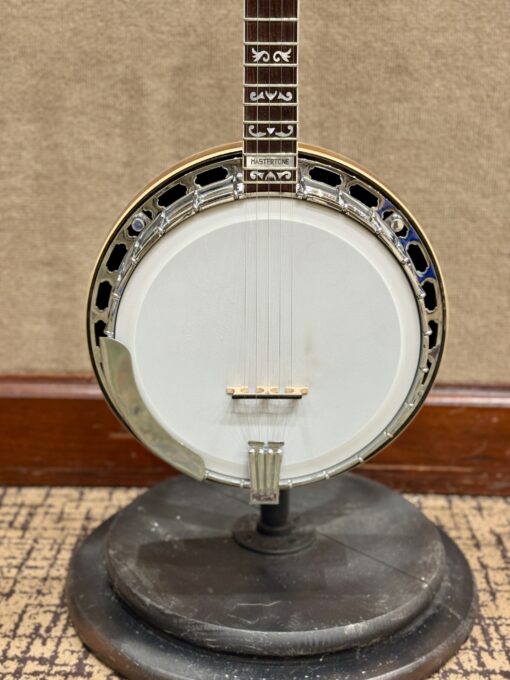
1930 Gibson TB-4 Mastertone archtop conversion with all original hardware. Serial #9554-45 places this squarely in Gibson's golden era of Mastertone production. Original rim, one-piece flange, original archtop tone ring, flying eagle inlays. Professional 5-string neck. Includes hardshell case.
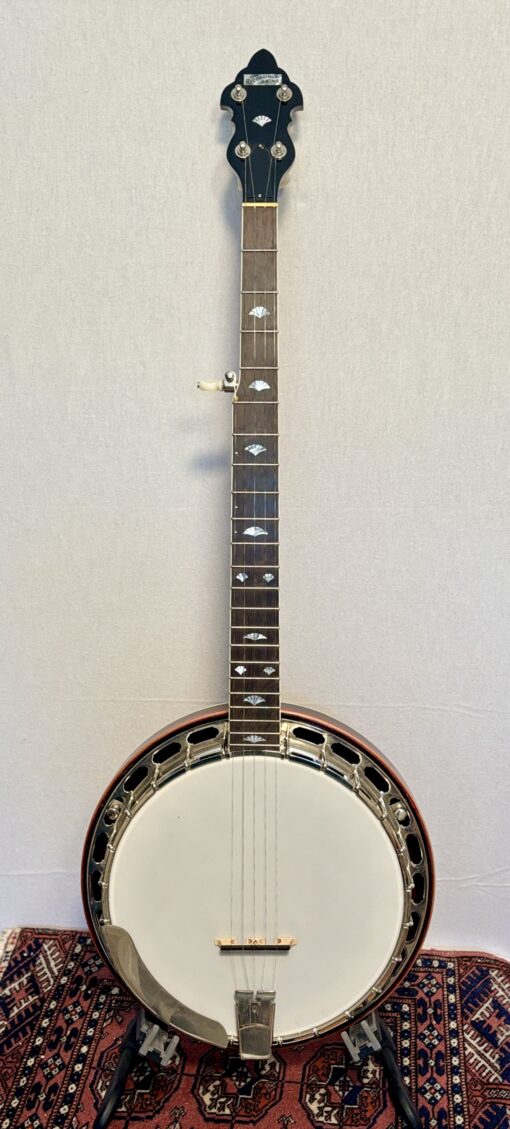
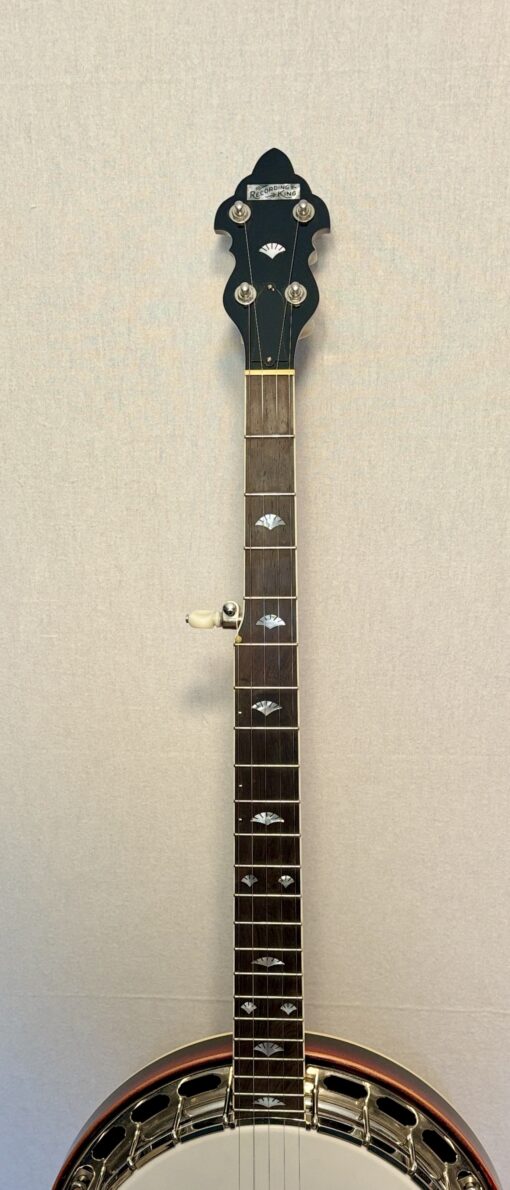
Late 1930s Recording King Model #731 — made by Gibson at Kalamazoo for Montgomery Ward. This tenor conversion features a Huber HR-30 tone ring, original sunburst maple resonator, one-piece flange, and prewar Presto tailpiece. The replacement 5-string neck includes an adjustable truss rod and modern tuners. Prewar craftsmanship meets modern playability.