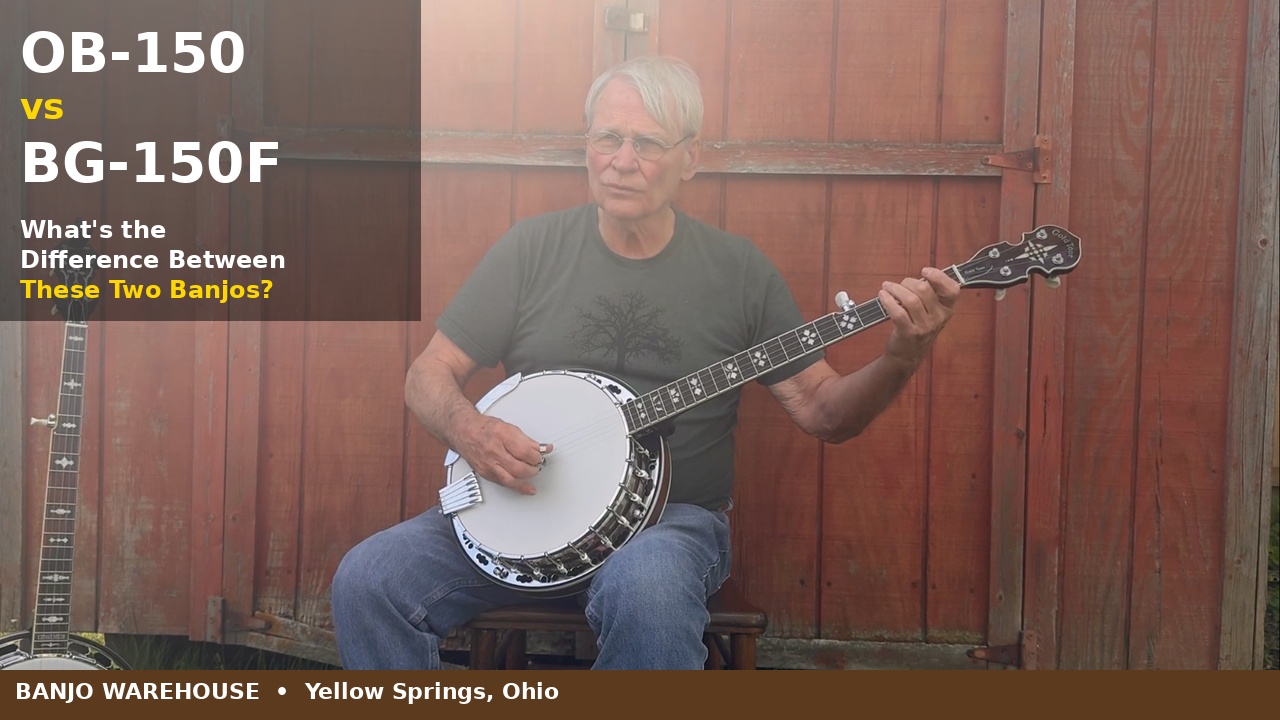
The Gold Tone OB-150 and BG-150F are priced within a few hundred dollars of each other, and from the outside they look like similar instruments. They are not. The difference is under the hood: the tone ring and the flange. The OB-150 has a one-piece cast flange and a 20-hole bell brass flathead tone ring. The BG-150F has a flat flange and a rolled brass flat bar tone ring. Those two differences change the sound, the projection, and who each banjo is built for. This is the most common question we get from players shopping Gold Tone at this level, and Geoff Hohwald answers it in the video below.
Watch: OB-150 vs BG-150F Sound Comparison
A note on the video. This comparison was filmed with the earlier BG-150F. Gold Tone updated it for 2026 with a Presto tailpiece, new fretboard and headstock inlay designs, a maple resonator and a custom bevel rim. What you hear still applies, because the tone ring and the flange did not change, and those are what the comparison is about. We have one of each in the shop right now: the 2026 BG-150F and one of the earlier build, which is the one in this video.
Both banjos use an 11 inch maple rim, 24 brackets, and a Remo coated head. The OB-150 rim is 3-ply Canadian maple; the 2026 BG-150F rim is multi-ply maple with a custom bevel. Both get a professional factory setup from Gold Tone in Titusville, Florida. The OB-150 ships in a hardshell case; the BG-150F comes with a gig bag, and Gold Tone’s HD16 hard case is available separately. If either one is in stock here in Yellow Springs, our banjo tech Tara checks it over a second time before it ships. Tara trained at the Huber Banjo factory under Steve Huber and Bennie Boling. Fifth string spikes are free on either banjo, just ask in your order notes.
OB-150 vs BG-150F: Side-by-Side Specs
| Feature | OB-150 | BG-150F |
|---|---|---|
| Tone Ring | 20-hole bell brass flathead | Rolled brass flat bar |
| Flange | One-piece cast | Flat |
| Rim | 11″ 3-ply Canadian maple | 11″ multi-ply maple with custom bevel |
| Neck | Maple | Maple |
| Fingerboard | Rosewood | Rosewood |
| Frets | 22 | 22 |
| Inlay | Vintage pearloid (ABS) with “Mastertone” block at the 21st fret | Hearts & Flowers (2026 design) |
| Nut | 1-3/16″ ZeroGlide | 1-3/16″ ZeroGlide |
| Tuners | GT Planetary | GT Planetary |
| Head | 11″ Remo HC coated | 11″ Remo HC coated |
| Bridge | 5/8″ maple with ebony cap | 5/8″ maple with ebony cap |
| Tailpiece | Presto | Presto |
| Tension Hoop | 11″ notched | 11″ brass notched |
| Coordinator Rods | Dual 11″ | Dual 11″ |
| Brackets | 24 | 24 |
| Resonator | 14″ maple | 14″ maple |
| Binding | Cream ABS | White ABS |
| Finish | Vintage Brown satin | Vintage Brown high gloss |
| Scale Length | 26-3/16″ | 26-3/16″ |
| Weight | 11.5 lbs | 8.5 lbs |
| Warranty | Transferable lifetime | Transferable lifetime |
| Case | Hardshell case included | Gig bag included, HD16 hard case optional |
| Factory Setup | Yes, Titusville, Florida | Yes, Titusville, Florida |
What is the Difference Between a Cast Flange and a Flat Flange?
This is the detail that matters most and the one most listings do not explain. The flange is the metal ring that connects the resonator to the pot assembly. A one-piece cast flange, like the OB-150 has, wraps around the pot as a single rigid piece of metal. A flat flange, like the BG-150F has, is a simpler and lighter construction. The cast flange adds rigidity to the pot assembly, which affects how energy transfers between the rim, the tone ring, and the resonator. In practical terms, the cast flange contributes to a tighter, more focused sound with more sustain. This is the same construction approach used in the prewar Gibson “Mastertone” banjos that defined the sound of bluegrass.
What is the Difference Between a Bell Brass Flathead Tone Ring and a Rolled Brass Flat Bar Tone Ring?
The tone ring is the metal ring that sits on top of the rim, under the head. The OB-150 uses a 20-hole bell brass flathead tone ring, a heavier sand-cast ring designed to produce the deep, punchy, projecting sound that bluegrass players associate with professional-grade instruments. The BG-150F uses a rolled brass flat bar tone ring, which is lighter and produces a brighter, more open tone. Neither is better in an absolute sense, but they sound different, and the choice depends on what kind of sound you are after.
Which One Should You Buy?
Buy the OB-150 if you want the closest thing to prewar “Mastertone” construction at this level. The combination of a one-piece cast flange and a 20-hole bell brass flathead tone ring is what separates a professional-grade bluegrass banjo from everything below it in the Gold Tone lineup. The OB-150 produces a deeper, punchier sound with more projection and sustain. If you plan to play in jam sessions, perform on stage, or record, the OB-150 gives you the construction that serious players expect to hear. It also ships in a hardshell case, where the BG-150F comes with a gig bag.
Buy the BG-150F if you want a quality resonator banjo with a lighter feel and a brighter tonal character. The rolled brass flat bar tone ring and flat flange produce a sound that is more open and less focused than the OB-150, which some players prefer. The BG-150F is also three pounds lighter, 8.5 against 11.5, which is the difference between a comfortable two-hour set standing up and a sore shoulder. If you are not sure you need the extra projection and sustain of the cast flange and bell brass ring, the BG-150F is a well-built instrument that will serve you well.
The honest answer: the OB-150 is the better instrument for bluegrass. The cast flange and bell brass tone ring are meaningful upgrades, not cosmetic differences. If your budget puts both banjos within reach, the OB-150 is the one that will grow with you longer and hold its value better. But the BG-150F is not a compromise. It is a legitimate bluegrass banjo at a fair price.
Still deciding? Call or text Geoff at (404) 218-8580 and talk it through.
What About Setup?
Both the OB-150 and the BG-150F leave Gold Tone’s factory in Titusville, Florida fully set up and ready to play. If we have one in stock here in Yellow Springs, our banjo tech Tara goes through it a second time before it ships, so it has been through two professional setups before it reaches you. Some Gold Tone orders ship directly from the distributor with the factory setup only. If you would like Tara to go through yours either way, say so in your order notes and we will route it through our shop first. A properly set up banjo plays easier, sounds better, and stays in tune longer.
Want to know when new banjos arrive?
Join the Banjo Warehouse email list for new arrival notifications, sale alerts, and free weekly banjo lessons from Geoff Hohwald.
Frequently Asked Questions
Why does the OB-150 cost more than the BG-150F if they look so similar?
The two sit at different points in Gold Tone’s lineup. The OB-150 is the entry point of the Orange Blossom series, which is the professional-grade line, while the BG-150F sits at the top of the BG series. The OB-150 puts its budget into the tone ring and the flange. The BG-150F spreads its budget across the appointments instead. Neither approach is wrong, but the cast flange and bell brass tone ring are the features that matter most for long-term tone and resale value.
Can I hear the difference between a cast flange and a flat flange?
Yes. Watch the video at the top of this page. The difference is most noticeable in sustain and low-end projection. The OB-150 with its cast flange rings longer and has a more focused, punchy sound. The BG-150F is brighter and more open. Whether you prefer one over the other is a matter of taste, but the difference is audible.
Is the OB-150 a professional-grade banjo?
Yes. The OB-150 is where professional-grade construction begins in the Gold Tone lineup. The sand-cast 20-hole bell brass flathead tone ring, one-piece cast flange, and 3-ply Canadian maple rim are the same construction approach used in prewar Gibson “Mastertone” banjos. It is meaningfully different from the BG-150F and from the CC-100R below it, and it is the most affordable banjo in Gold Tone’s catalog that uses this construction.
How does the OB-150 compare to the OB-250?
The OB-250 steps up from the OB-150 with a curly maple neck, an ebony fingerboard, Hearts and Flowers inlay, Gotoh planetary tuners, and a flame maple resonator. Both share the same professional-grade pot construction: cast flange, bell brass tone ring, 3-ply maple rim. The OB-250 adds premium appointments on top of that foundation. If you want professional construction with upgraded cosmetics and hardware, the OB-250 is the next step up. The OB-175 sits between them.
Are either of these available left-handed?
Yes. Gold Tone builds both the OB-150 and the BG-150F left-handed at the same price. One thing to know: the left-handed BG-150F we stock is the earlier build, with a Terminator tailpiece and a mahogany resonator, not the 2026 specs in the table above. The tone ring and the flange are the same, so everything on this page about how the two banjos sound still applies. We order the left-handed OB-150 regularly. Call or text Geoff at (404) 218-8580.
What is included with the OB-150 and BG-150F?
The OB-150 ships with a hardshell case. The BG-150F comes with a gig bag, with Gold Tone’s HD16 hard case available separately. Both carry Gold Tone’s transferable lifetime warranty, which stays with the instrument if you sell it. Both receive a professional factory setup at Gold Tone in Titusville, Florida, and anything in stock in Yellow Springs gets a second setup from Tara. Fifth string spikes are free on either banjo, just ask in your order notes. Free insured shipping anywhere in the United States.
Does Banjo Warehouse carry both the OB-150 and BG-150F?
Yes. We are an authorized Gold Tone dealer in Yellow Springs, Ohio and carry both, along with the rest of the Gold Tone line. Call or text Geoff at (404) 218-8580 if you want to talk through which one is right for you. He has been playing and selling banjos since 1963 and can help you decide based on where you are in your playing and what kind of sound you are after.