
History
The Salstrom Banjo Company: How a Small Illinois Town Built the Banjo Fender Couldn’t Ignore
Mar
Most banjo players have never heard of the Salstrom Banjo Company. That’s exactly why the ones who have hold on to their instruments so tightly.
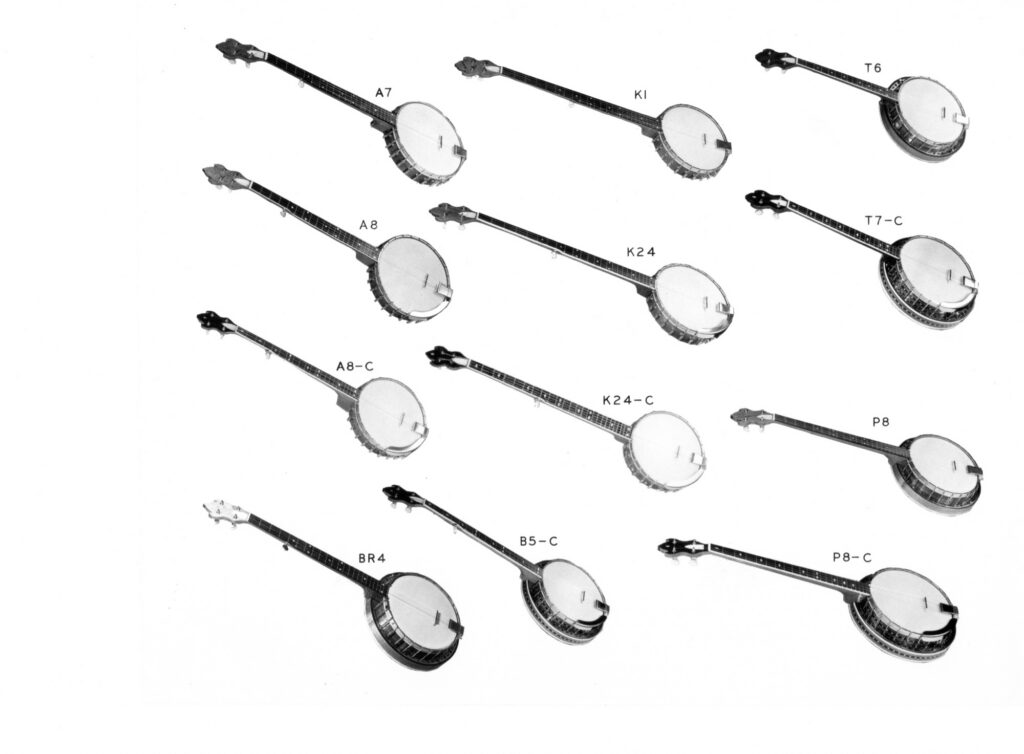
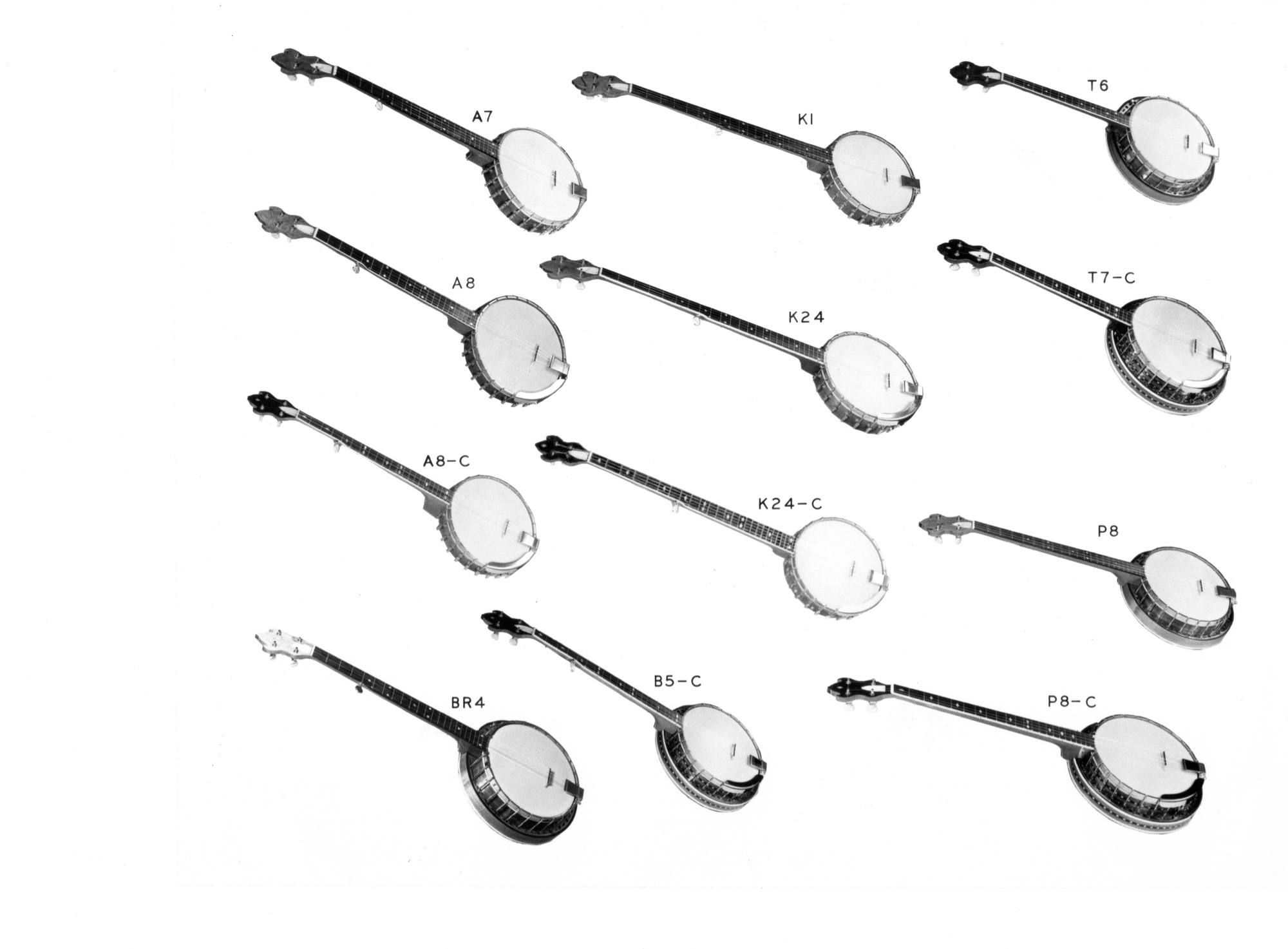
This week I acquired a Salstrom B5-C — a bluegrass resonator model from the 1960s — and in the process connected with John Lindhorst, owner of Oregon Music Garage in Oregon, Illinois, who is writing a book and building a museum exhibition documenting the Salstrom company’s place in American music history. What John shared opened up a thread I didn’t expect. It runs directly through my own story as a banjo player.
What Was the Salstrom Banjo Company?
The Salstrom Banjo Company was founded in Oregon, Illinois — a small town about 100 miles west of Chicago — by Phil Salstrom, a master woodworker who ran a business called Rock Wood Carvers. The company’s origins trace to Gus Stamm, a serial entrepreneur who came to Oregon, Illinois to meet Phil Salstrom, believing his machine wood carving expertise could produce banjo necks for the booming folk music scene of the early 1960s. The two formed a partnership, and the Salstrom Banjo Company grew from there.
What made Salstrom banjos distinctive was the woodwork. As word got out about the Oregon, Illinois shop, serious players with high-end banjos would come through and offer feedback, and the craftsmen would use it to keep improving. The result was an instrument that the banjo world came to covet. I’ve heard players describe Salstrom tone as a “holy grail,” and having handled one this week, I understand why.
The Fender Chapter
When Fender acquired Salstrom in the mid-1960s and moved production to their Fullerton, California factory, most of the models remained identical — the craftsmen and the designs came with the deal. The USA-made Fender banjos of that era and the Salstrom models are nearly the same instrument. Sometimes a Salstrom will come up at a bargain price because buyers simply don’t recognize it. That’s changing as researchers like John document the company’s history.
The B5-C
The B5-C was Salstrom’s top-of-the-line bluegrass model. John shared the original promo sheets with me, and looking at the specs, it was designed for sharp staccato bluegrass picking — multi-laminated neck of select mahogany, maple, and walnut woods, select polished ebony fingerboard with 12 half-inch diamond inlay, solid brass resonator flange, 14-inch mahogany resonator, and a “Tone-All” tone chamber. Every component was high quality brass, heavy nickel or chrome plated, with a hand-rubbed Lucite finish.
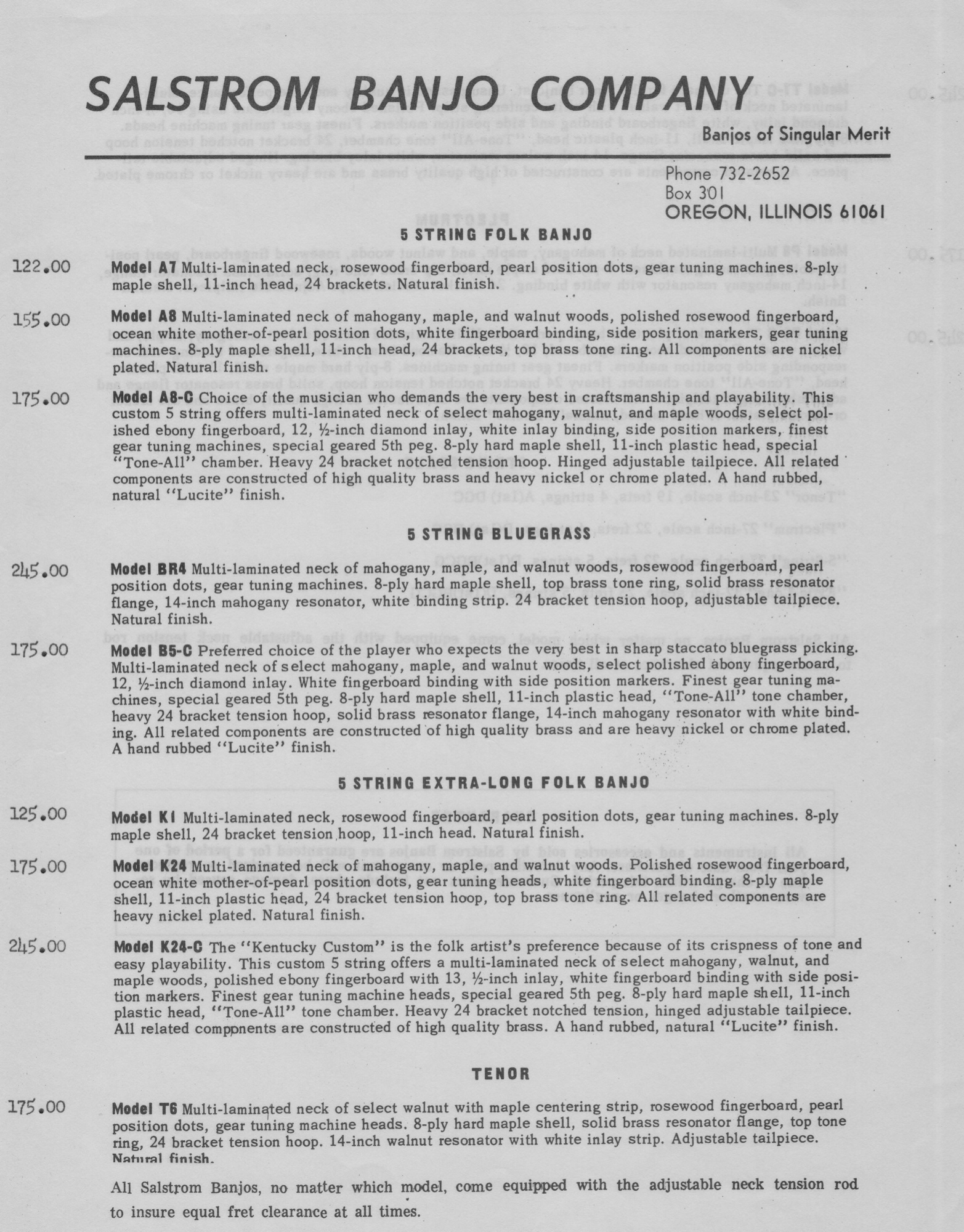
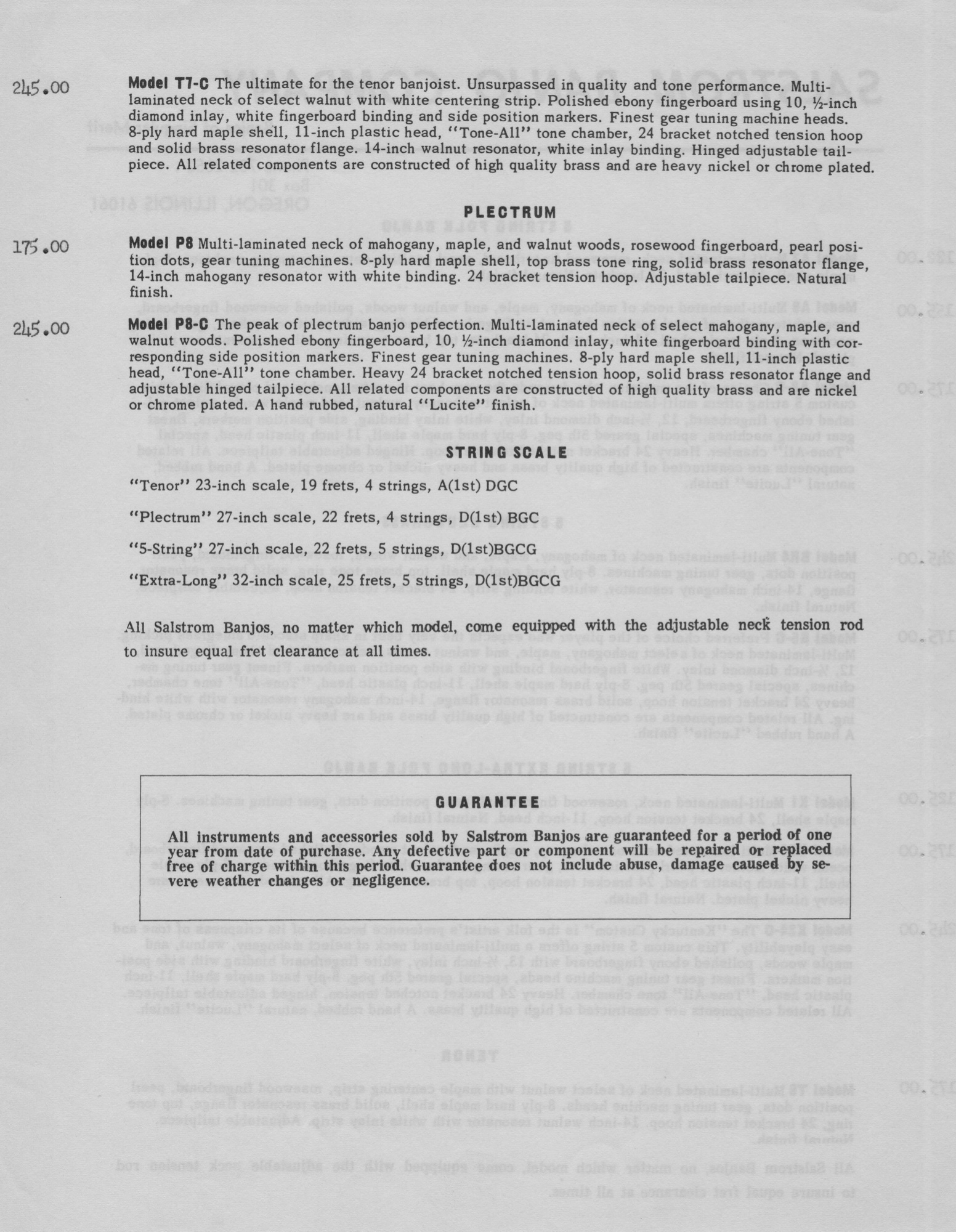
My B5-C came in this week from a fellow in Cleveland, Ohio and is being cleaned up before it goes to John for his museum exhibition. We are excited to share photos and a video of it being played in the coming months. If you have a Salstrom banjo or information about the company, John would like to hear from you: oregonmusicgarage@gmail.com
My Connection: Robby Robinson
Here’s where this gets personal for me. One of my first banjo teachers was a luthier named Robby Robinson — a mandolin and banjo player especially known for his woodwork, who played with Sid Campbell and Paul “Moon” Mullins, among many others. In 1965, Robby left Columbus, Ohio and went to work at the Salstrom Banjo Company in Illinois as a luthier.
Before heading to Illinois, Robby was an active and documented recording musician. In 1963 he recorded several excellent tracks with Red Allen for Rebel Records — tracks now available on Red Allen: Keep On Going, the Rebel & Melodeon Recordings (Rebel CD-1127). He was equally accomplished on both banjo and mandolin.
If you know Ohio bluegrass history, you know Moon Mullins. He was a fiddler and radio personality on Middletown’s WPFB-AM whose show was a lifeline for generations of Kentucky natives working in Ohio’s paper and steel plants. His son Joe (of Joe Mullins and the Radio Ramblers fame) and grandson Daniel are continuing his legacy today with their radio station in Xenia (Real Roots Radio) and their exceptional bluegrass festivals (Industrial Strength Bluegrass). Sid Campbell was the guitarist whose band included Moon, and who brought him to Middletown in 1964. The world Robby Robinson moved through before heading to Illinois was the heart of Ohio bluegrass in the early 1960s. It was the world that shaped me as a player and teacher.
If you have any memories of Robby Robinson, the Salstrom company, or the Ohio bluegrass scene of that era, I’d love to hear from you. Call me at 404-218-8580 or email thebanjowarehouse@gmail.com.
Note: The correct spelling of Robby Robinson’s nickname is “Robby,” not “Robbie” — a correction provided by bluegrass musician and historian Sandy Rothman, who was my roommate in Columbus for a time and knew Robby personally. Sandy notes that people sometimes confuse his name with Robbie Robertson of The Band. He also confirms that Robby recorded with Red Allen for Rebel Records in 1963.
About John Lindhorst’s Project
John Lindhorst owns Oregon Music Garage in Oregon, Illinois — the same town where Phil Salstrom built his banjos. He is documenting the musical heritage of Oregon, Illinois, with the Salstrom Banjo Company as a centerpiece. The project includes a book and a museum exhibition that will also feature Fender banjos from the late 1960s and early 1970s — the instruments that carried the Salstrom legacy forward after the acquisition.
If you have a Salstrom banjo, information about the company, or memories of that era of Illinois music history, reach out to John directly: oregonmusicgarage@gmail.com
Want to know when instruments like this B5-C come through the shop? Join our email list: https://f02c7f60b02f11ef81a461960b153e18.eo.page/9n1z3
Geoff Hohwald has been selling and playing banjos since 1963. Banjo Warehouse is located in Yellow Springs, Ohio.
