
History
The First Bluegrass Concert on a College Campus Happened Right Here in Yellow Springs
Feb
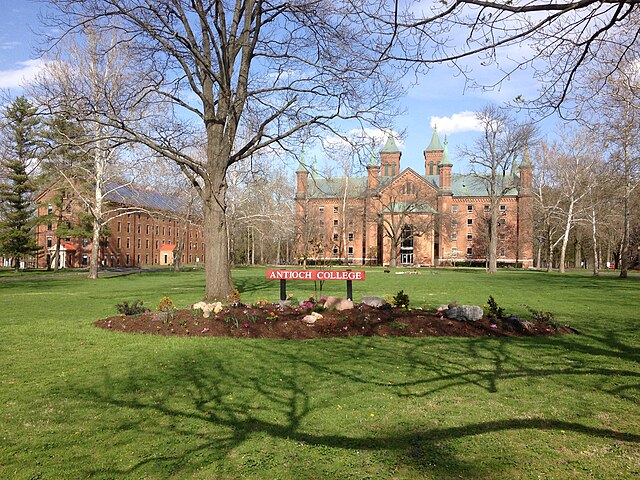
Banjo Warehouse is located in Yellow Springs, Ohio, just a few hundred yards from the site of the first bluegrass concert ever held on a college campus.
In December 1959, the Osborne Brothers, Bobby Osborne on mandolin and Sonny Osborne on banjo, walked into Kelly Hall at Antioch College and played a show that would quietly make history. It was the first time a bluegrass act had been booked to perform on a college campus anywhere in the country.
I started playing banjo in 1963, so this concert even predates me, and I’ve been doing this a long time.
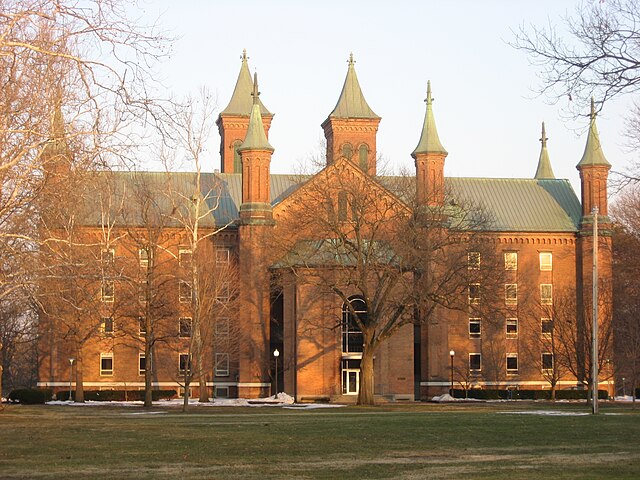
Antioch College in Yellow Springs, Ohio. Kelly Hall, where the Osborne Brothers performed in December 1959, is housed in this building. Banjo Warehouse is located just a few hundred yards away.
How Did Bluegrass End Up on a College Campus in 1959?
In the late 1950s, bluegrass music was still largely confined to radio barn dances, roadhouses, and the country music circuit. The idea of a bluegrass band playing a college auditorium was virtually unheard of. But Antioch College had a history of doing things differently.
Yellow Springs, Xenia, Middletown and the surrounding Columbus, Dayton, and Cincinnati region had become a hub for Appalachian migrants who brought their music north with them during the post-war industrial boom. Bluegrass was alive in the bars and dance halls of southwestern Ohio, and students at Antioch were paying attention.
According to a July 1973 article in Muleskinner News by Tom Teepen, the Osborne Brothers were booked for the December 1959 show at Kelly Hall. The concert drew an enthusiastic crowd and helped open the door for what would become a flood of bluegrass acts on the college circuit throughout the rest of the 1960s, a movement that played a crucial role in introducing the genre to a new, younger audience. When I was a student at Ohio State from 1965-1968, I was able to join in on the movement and play banjo at bars all over Columbus.
Why Did the Osborne Brothers Matter?
Bobby and Sonny Osborne were not a typical bluegrass act. By 1959, they had already recorded for MGM Records and were developing the high lead trio vocal style that would become their signature. Their harmonies were tighter and more polished than what most audiences expected from bluegrass, and their willingness to experiment with arrangements made them appealing to listeners who might not have otherwise sought out the genre.
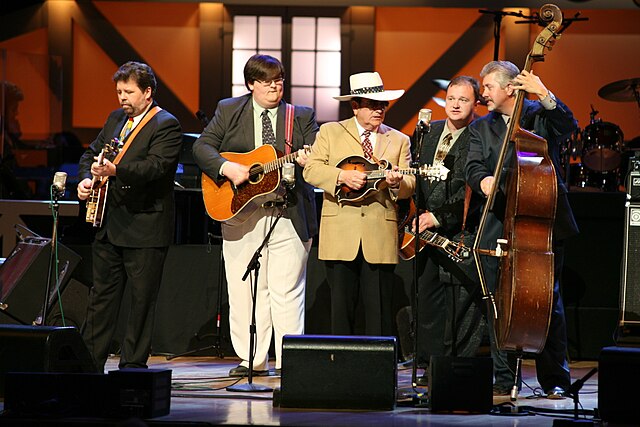
Bobby Osborne performing at the Grand Ole Opry in 2007 with The Rocky Top X-Press. Bobby and his brother Sonny played the historic first bluegrass concert on a college campus at Antioch College in Yellow Springs, Ohio in December 1959.
The Osborne Brothers went on to join the Grand Ole Opry in 1964 and recorded “Rocky Top” in 1967, one of the most recognizable songs in American music. But before all of that, they played Kelly Hall in Yellow Springs.
What Was the Dayton Bluegrass Scene Like in the 1950s?
Southwestern Ohio was one of the most important bluegrass regions in the country during the 1950s and 1960s. Appalachian families who moved north for factory work brought their music with them, and cities like Dayton, Cincinnati, and Hamilton became hotbeds for bluegrass performance and recording.
The Osborne Brothers were regulars in the area. They played Thursday nights at Ruby’s White Sands in Dayton and were well known throughout the regional circuit. Booking them for an Antioch College show made geographic sense (they were nearby and available) but the cultural significance of that booking extended far beyond convenience.
Historian Neil V. Rosenberg, a Bluegrass Music Hall of Fame inductee, wrote about attending a subsequent Osborne Brothers concert at Antioch in early 1960 in his book Bluegrass: A History. Rosenberg, then a student at Oberlin College, traveled to Yellow Springs with his college band to open for the Osbornes. His account confirms that bluegrass was catching on at Antioch and that the college was actively booking acts from the regional scene.
What Happened After the Antioch Concert?
The success of bluegrass on college campuses in the early 1960s fundamentally changed the genre’s audience and economics. Folk music was exploding on campuses across America, and bluegrass rode that wave. Acts like Bill Monroe, Flatt & Scruggs, and the Stanley Brothers found new audiences at colleges and folk festivals, expanding far beyond their traditional base.
The 1959 Antioch concert was one of the earliest sparks in that movement. Yellow Springs, Ohio, a small village of fewer than 4,000 people, played a quiet but meaningful role in bluegrass history.
Banjo Warehouse and Yellow Springs
I’ve been in the bluegrass banjo business for over 50 years, and it still gives me a kick knowing that the shop sits just down the road from where some of this started. Banjo Warehouse specializes in vintage and pre-war five-string banjos, the same instruments that defined the sound of bluegrass from its earliest days.
We carry pre-war Gibson Mastertone banjos, Deering banjos, Greg Rich x Gold Tone banjos, and more. Every banjo ships professionally set up, free anywhere in the US with a 7-day money-back guarantee.
Questions? Give me a call at (404) 218-8580.
Acknowledgments
Thank you to Antioch College Archivist Scott Sanders for providing the original Muleskinner News article that documented this piece of bluegrass history.
