







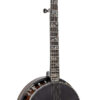
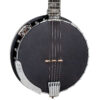


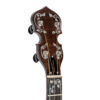


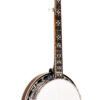
Gold Tone ML-1/L Missing Link Béla Fleck Baritone Banjo with Case (Left-Handed)

$1,899.99
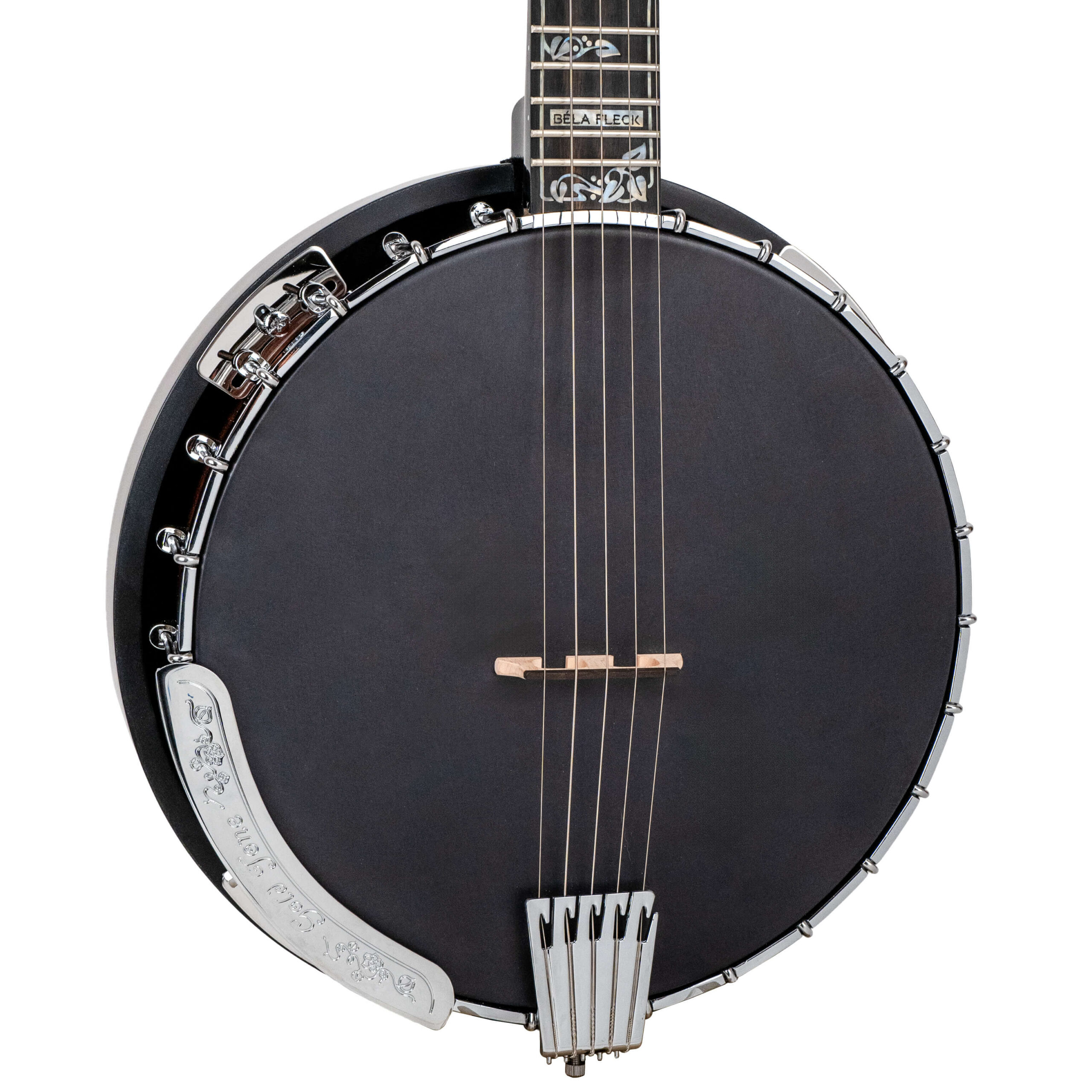
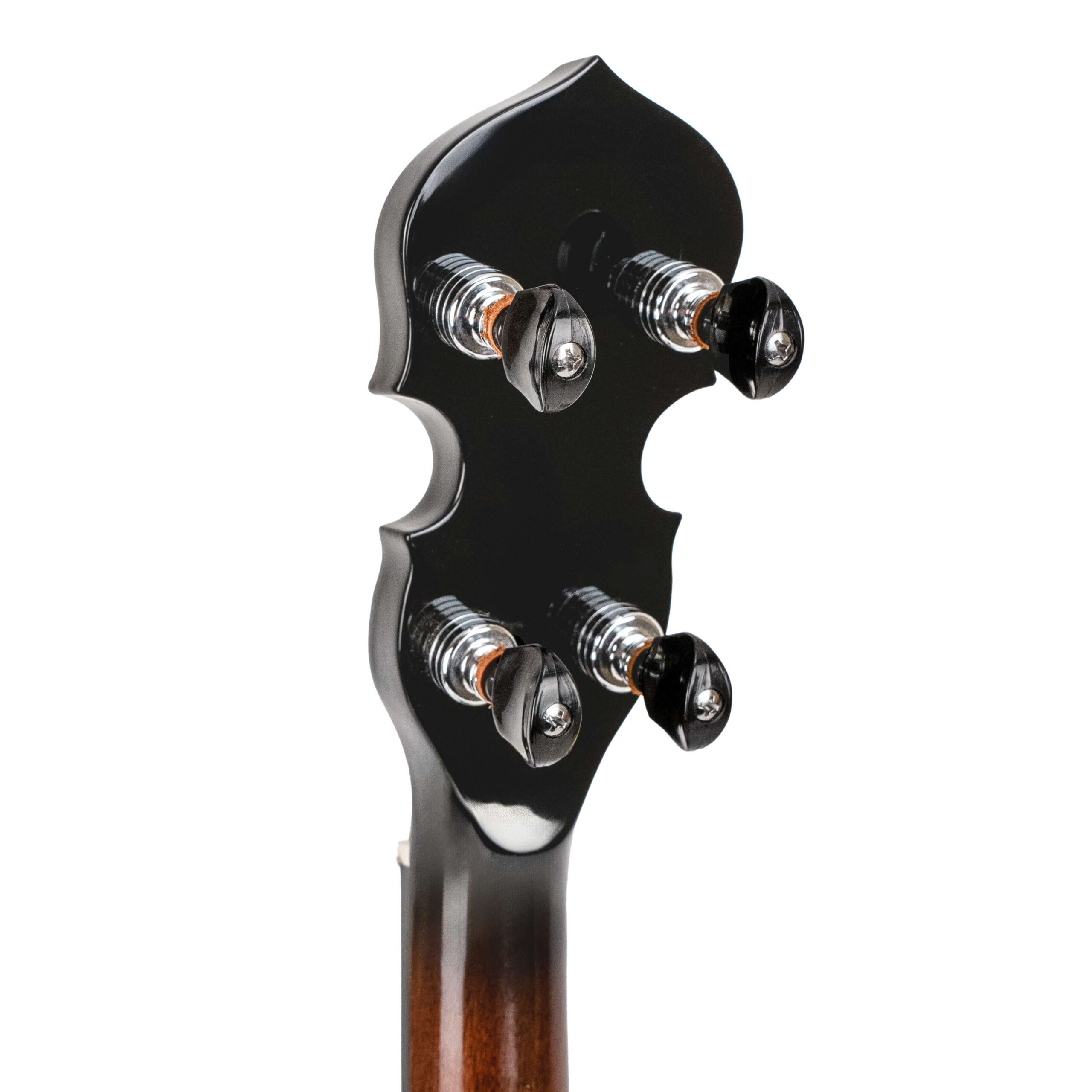
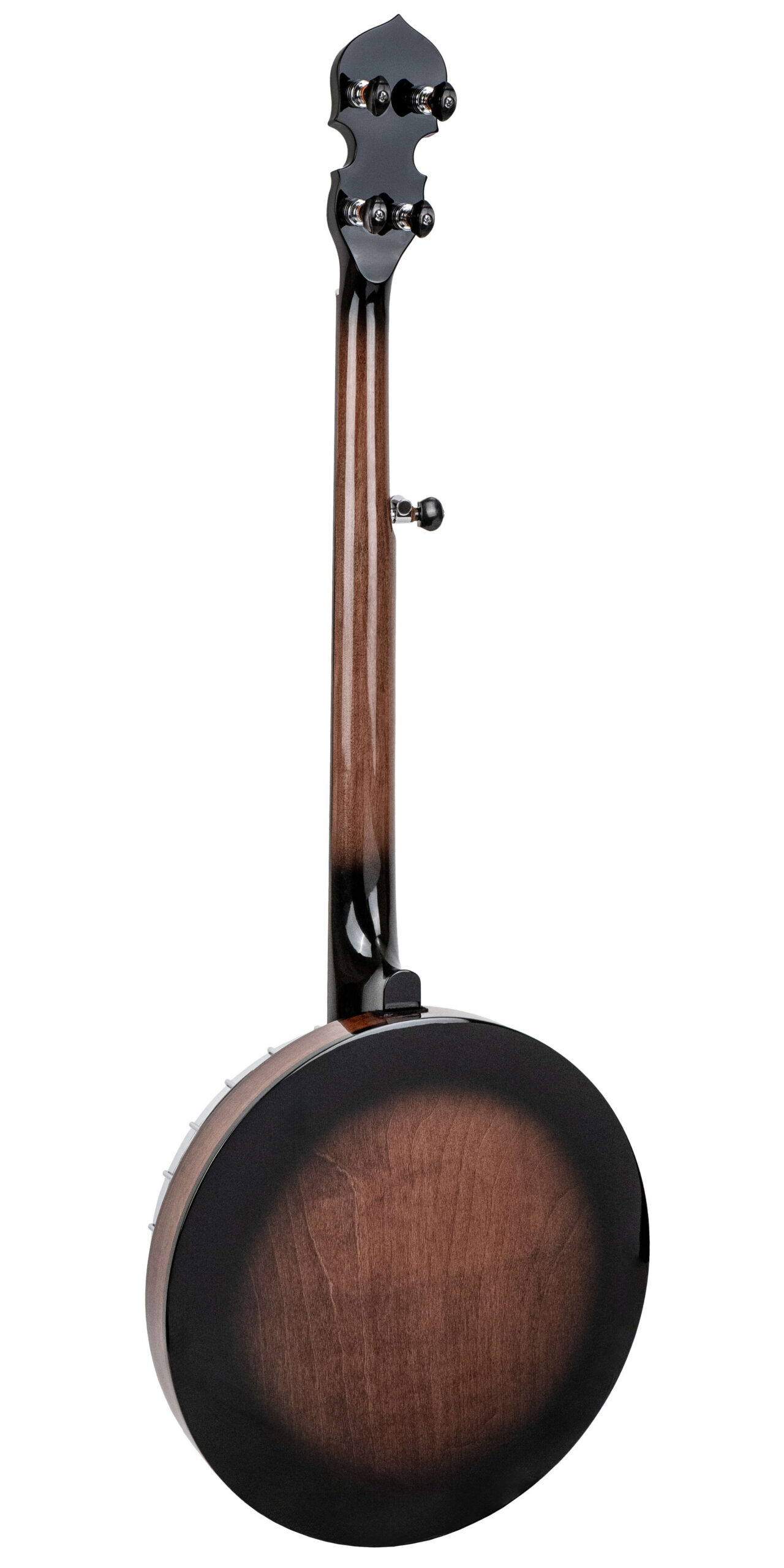
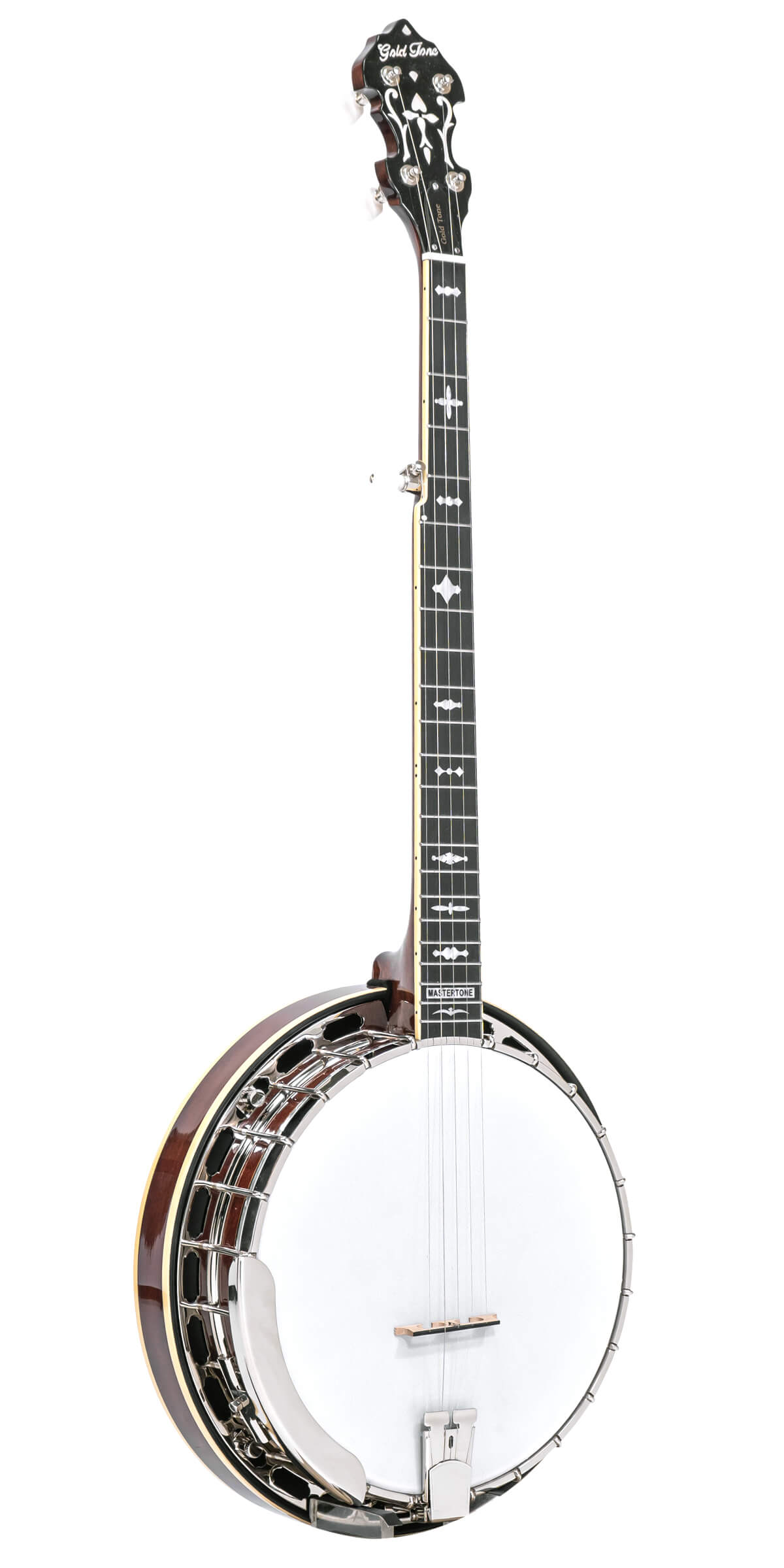
This is the left-handed version of the Gold Tone ML-1 Missing Link baritone banjo — a genuinely rare instrument co-designed by Béla Fleck to fill the sonic gap between a standard five-string and a cello banjo. Tuned to open C (CGCEG), it delivers a deep, warm, orchestral voice unlike anything else on the market, built around a 12-inch maple rim with a rolled brass flat-bar tone ring. Every ML-1/L is professionally set up at Gold Tone’s factory in Titusville, FL.
In stock
At a Glance
- Handedness
- Left-Handed
- Style
- Resonator Banjo
- Strings
- 5
- Scale Length
- 26-1/4"
- Tone Ring
- Brass
- Pickup
- No
- Made In
- China
This is the left-handed version of the Gold Tone ML-1 Missing Link baritone banjo, and I want to be straightforward with you: this is one of the most unusual, thoughtfully conceived, and genuinely exciting banjos Gold Tone has ever built. I’ve been working with banjos for over 45 years, and the ML-1 occupies a tonal territory that simply did not exist before Béla Fleck and Gold Tone president Wayne Rogers figured out how to get there. Left-handed players now have full access to this instrument — same specs, same soul, mirror-image neck and head. If you play left-handed and you’ve been curious about a baritone banjo, this is the one.
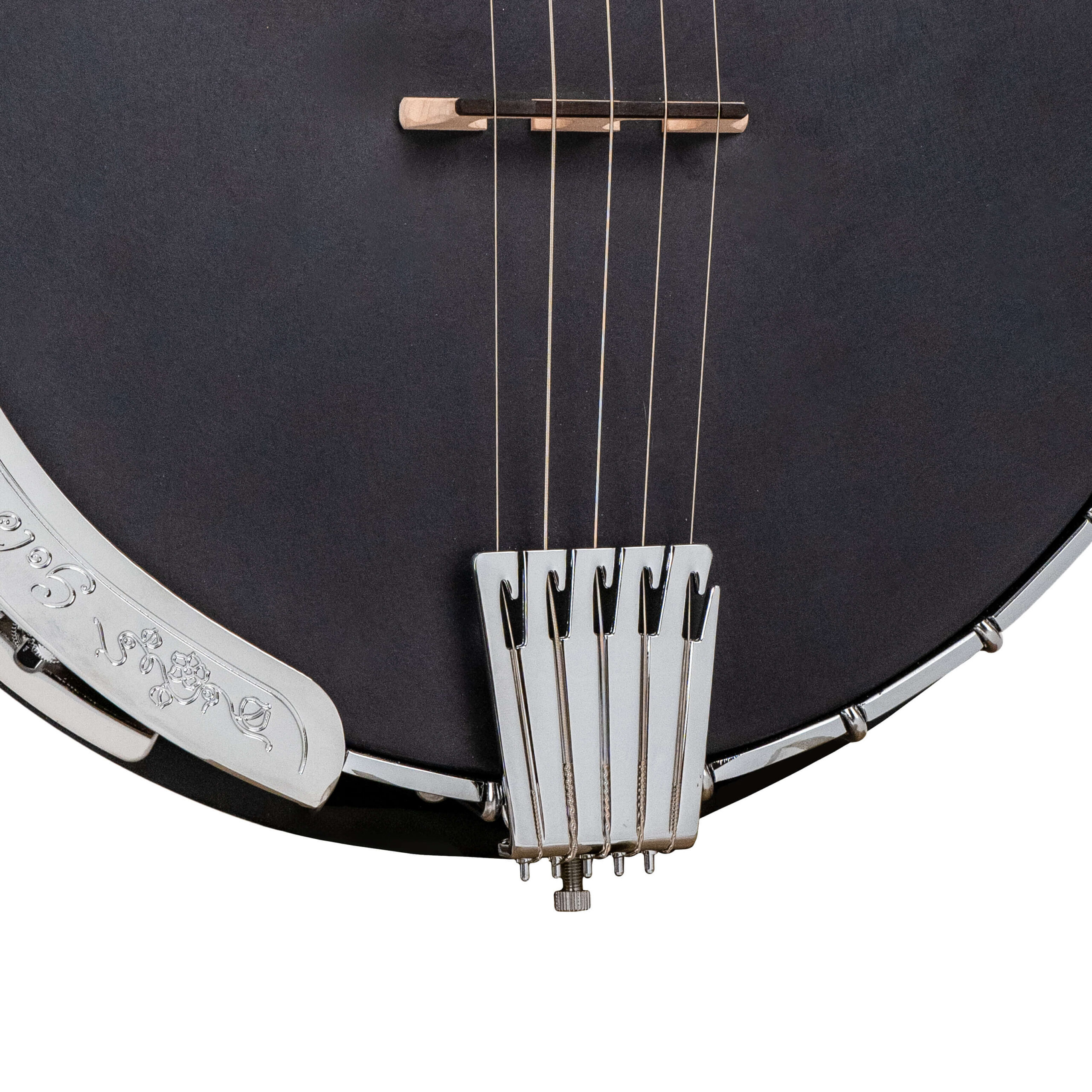
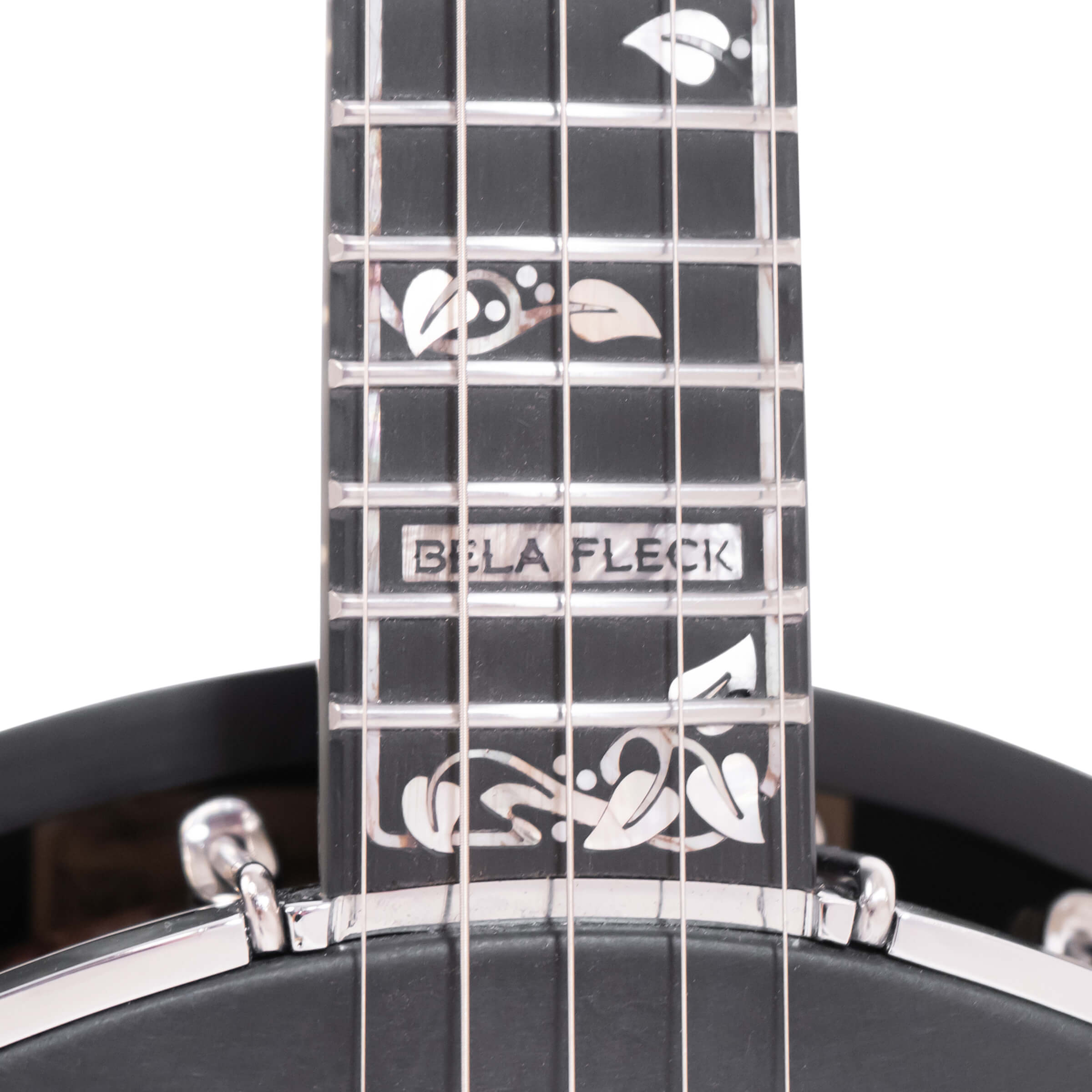
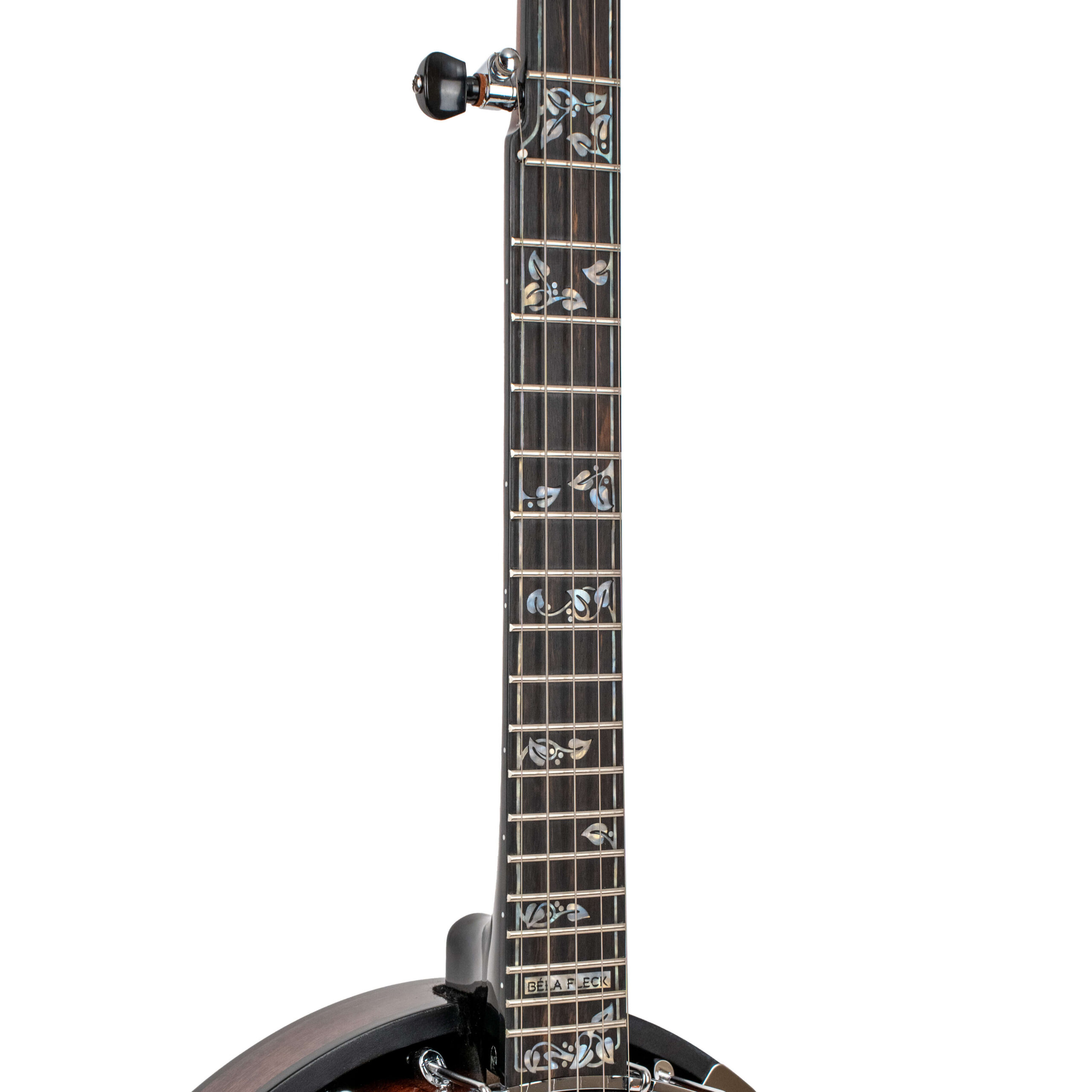
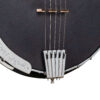
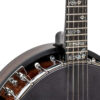
The backstory matters here. Béla admired how John Hartford used a low-tuned five-string — a 1920s twelve-inch Farland — to carve out a rich, cello-like space in a band mix. The Gold Tone CEB-5 Cello Banjo (tuned a full octave below a standard five-string) already existed, but Béla heard a gap between that instrument and the standard banjo. He wanted something that lived in the middle: deep enough to anchor a chord voicing, light enough on the attack to function melodically. The result, after months of collaboration and multiple prototypes, is the ML-1, tuned CGCEG — open C in a G configuration, essentially an octave below the fifth fret of a standard five-string. A 12-inch, three-ply maple rim supports a rolled brass flat-bar tone ring, a combination that gives the instrument a focused low-end presence with a surprisingly clear and bell-like sustain. The 12-inch Remo Black Suede head contributes warmth without mud, and a custom 7/8-inch radiused maple bridge with an ebony cap helps translate the tension of those all-wound strings into something musical and even across the full fretboard. The hard rock Canadian maple neck is topped with a genuine ebony fingerboard cut to a compound radius — 5 to 10 inches — which means the lower positions feel comfortable for chord work and the upper register plays without fighting you. Béla designed the art nouveau inlay pattern himself, and it runs from the first position all the way to the peghead without interruption except for the Zero Glide nut, which is one of the most practical innovations in modern banjo building for accurate intonation and smooth, low-friction tuning. Gold Tone Master Planetary tuners with black buttons round out a look that is elegant without being fussy, and a hard case is included.
Each instrument receives a professional setup at Gold Tone’s factory in Titusville, Florida before it ships to you. For an instrument as specialized as the ML-1, with its longer scale, all-wound string set, and compound-radius fretboard, a proper setup is not optional — action, intonation, neck relief, and string response from the nut to the 22nd fret are all dialed in before the instrument leaves the factory. You’re not opening a factory box — you’re receiving a playing instrument.
Why Buy From Banjo Warehouse
Banjo Warehouse is an authorized Gold Tone dealer, which means every ML-1/L we sell is fully covered by Gold Tone’s manufacturer warranty and backed by our own customer service. Financing is available through PayPal Pay in 4 and 3, 6, 12, and 24-month plans with no late fees, plus Afterpay, so the ML-1 doesn’t have to wait.
Gold Tone ML-1/L Specifications
| Handedness | Left-Handed |
| Tuning | CGCEG (Open C, G Configuration) |
| Scale Length | 26-1/4″ |
| Rim | 12″ 3-Ply Maple |
| Tone Ring | 12″ Rolled Brass Flat Bar |
| Head | 12″ Remo MC Black Suede |
| Neck Material | Hard Rock Maple |
| Fingerboard | Ebony, 5″–10″ Compound Radius |
| Frets | 22 Jumbo |
| Nut | 1-3/8″ Zero Glide Nut |
| Inlay | Art Nouveau Custom (Béla Fleck Design) |
| Truss Rod | Two-Way Adjustable |
| Tuners | Gold Tone Master Planetary, Black Buttons |
| Bridge | 7/8″ Radiused Maple with Ebony Cap |
| Tailpiece | Gold Tone Terminator |
| Tension Hoop | 12″ Notched |
| Brackets | 26 |
| Coordinator Rods | Dual 12″ |
| Resonator | 14″ Maple |
| Binding | Black ABS |
| Finish | Vintage Brown / High Gloss |
| Hardware | Chrome Plated |
| String Gauge | .018w, .040w, .030w, .022w, .018w (All Wound) |
| Weight | 9.2 lbs. |
| Case | Included |
Frequently Asked Questions
How hard is it to learn to play the ML-1 if I already play standard five-string banjo?
The good news is that the ML-1 is tuned to CGCEG — an open C chord in a G configuration — which means the intervallic relationships between the strings are identical to a standard five-string tuned to open G. Your roll patterns, your right-hand technique, and your basic chord shapes all transfer directly. The main adjustment is the longer scale length (26-1/4″) and the heavier, all-wound strings, which require a bit more left-hand pressure and a slightly different right-hand attack to get the strings speaking cleanly. Most players who are comfortable on a standard five-string find the transition manageable within a few sessions. The deeper tuning opens up voicings that simply aren’t possible on a standard banjo, and many players find that genuinely inspiring rather than disorienting.
Why does the left-handed ML-1 matter — can’t I just restring a right-handed model?
On most banjos, flipping the instrument and restringing is workable but imperfect — the nut slots, the bridge placement, the neck angle, and often the truss rod access are all optimized for one orientation. On the ML-1, the compound-radius fingerboard and the Zero Glide nut are precisely fitted for the string gauges in a specific order, and the resonator and coordinator rod geometry are set for the right-handed configuration. The ML-1/L is purpose-built as a left-handed instrument from the ground up, which means left-handed players get the same intonation accuracy, playability, and setup quality that right-handed players enjoy — nothing is a compromise.
Want to know when new banjos arrive? Join our email list: Sign up here.
Be the first to review “Gold Tone ML-1/L Missing Link Béla Fleck Baritone Banjo with Case (Left-Handed)”
You must be logged in to post a review.
Related products
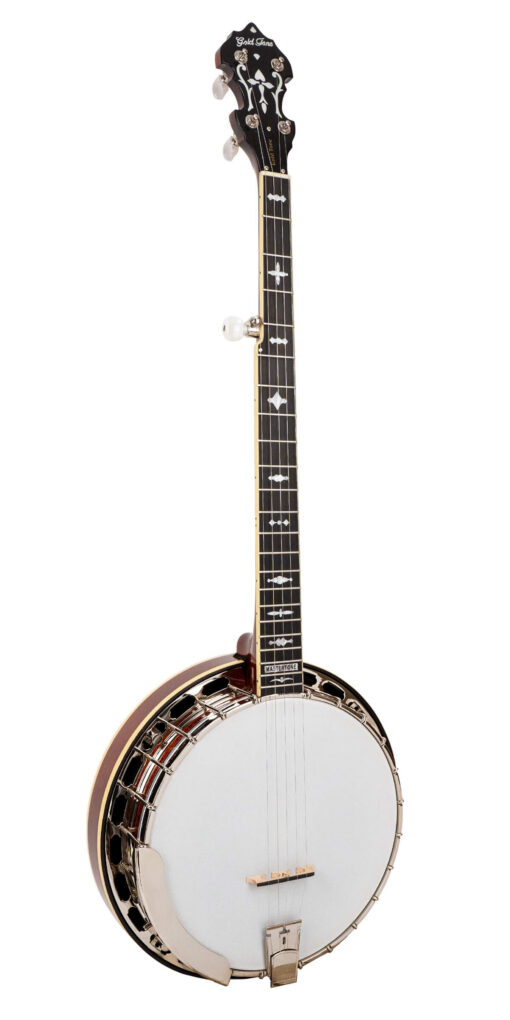
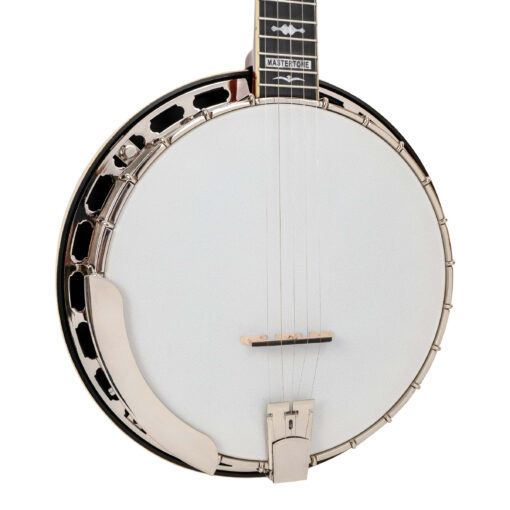
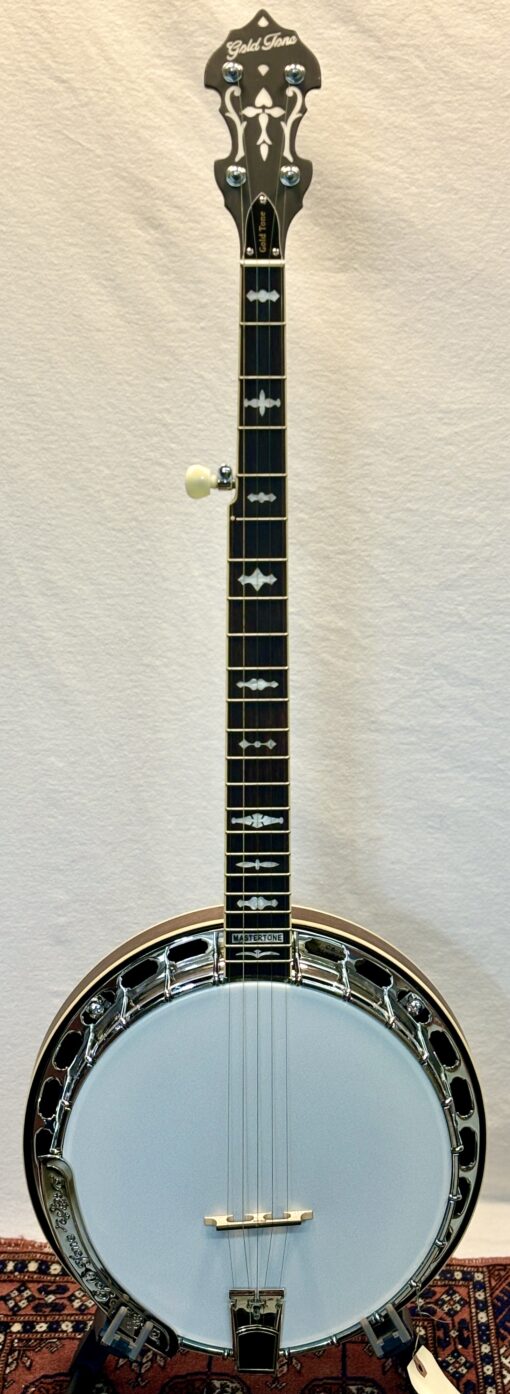
In late 2018, Jake Stogdill and Robby Boone had a concept for replicating one of the most iconic banjos, played by one of the most iconic banjo players of all time, JD Crowe's original RB-3 ("Banger"). After extensive research and great attention to every detail, Gold Tone was able to rebirth this classic banjo as the OB-3.
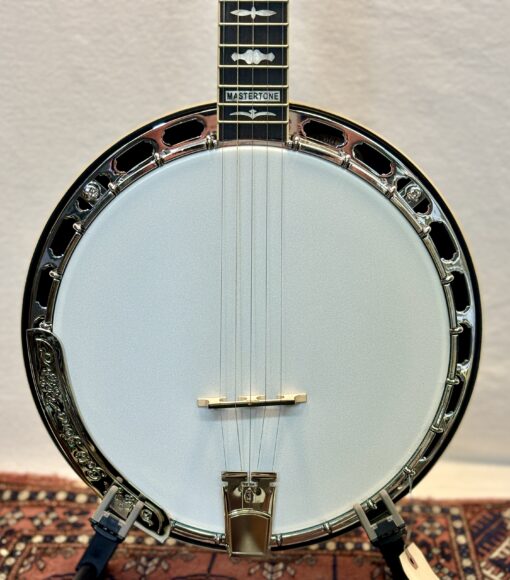
"Pre-war" style, at a price anyone can afford, AND authentic tone and superb playability describe the OB-150+. This Bluegrass banjo sports a three-ply maple rim and one-piece flange (just like the megabucks originals), a maple neck inlayed in authentic style, an upgraded JLS tone ring, and a smooth satin finish. The OB-150 is professionally set up in our Ohio shop and comes with TRANSFERRABLE lifetime warranty.


The revolutionary Gold Tone WR-7 Wayne Rogers Signature 7-String Banjitar features an innovative doubled low E string design that creates an authentic banjo drone effect. With pre-installed SMP+ pickup, premium maple construction, and included gig bag, this instrument bridges the gap between guitar and banjo like no other.
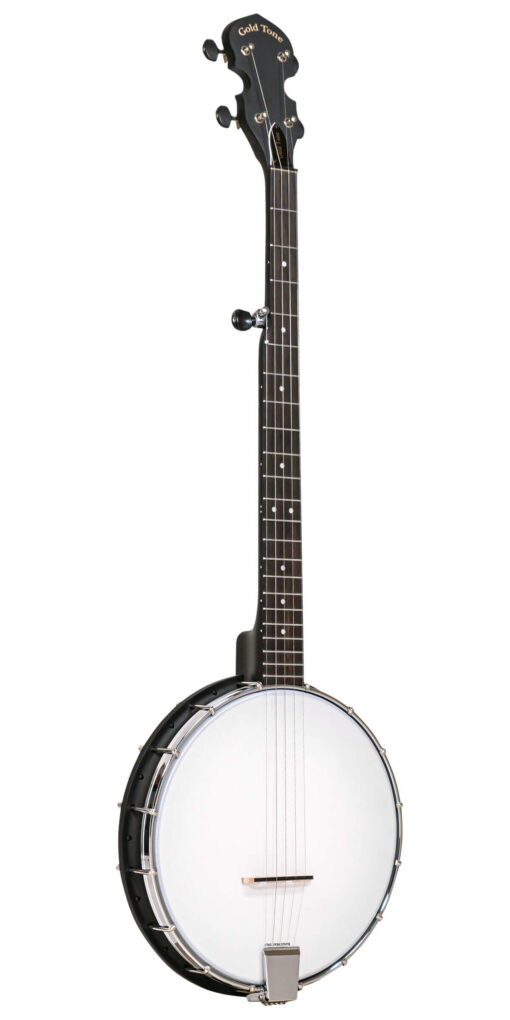
The Gold Tone AC-1 is an award-winning beginner banjo that weighs under four pounds, thanks to its innovative composite rim and slim, playable neck. Named 'Best in Show / MUST Stock' at the 2016 Summer NAMM Show in Nashville, it delivers real banjo tone in a durable, travel-friendly package. It ships with a gig bag and a professional setup by our banjo tech Tara at Banjo Warehouse.
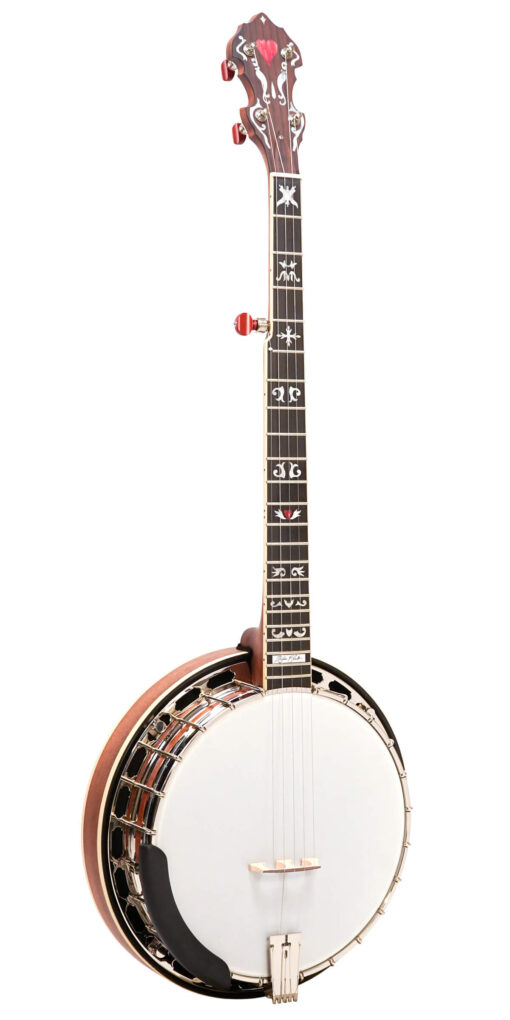
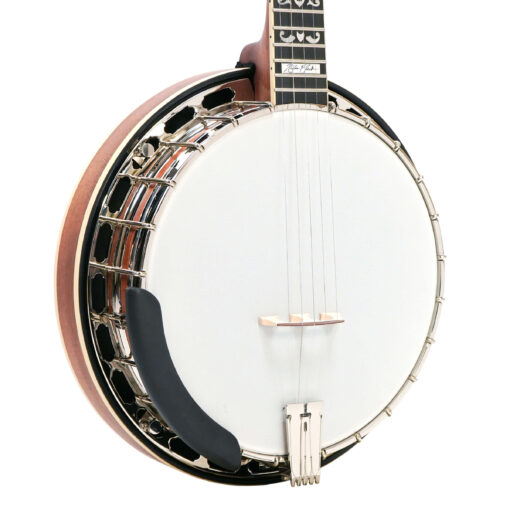
Left-handed Gold Tone Bluegrass Heart Béla Fleck Signature Banjo with no-hole bell bronze tone ring, mahogany neck, radiused ebony fingerboard with Flying Eagle red heart inlays, Rickard Cyclone 10:1 tuners with brass buttons, Prucha Presto tailpiece, and Little Mountain armrest. 11.5 lbs. Includes hardshell case, professional setup by our banjo tech Tara, and free shipping.
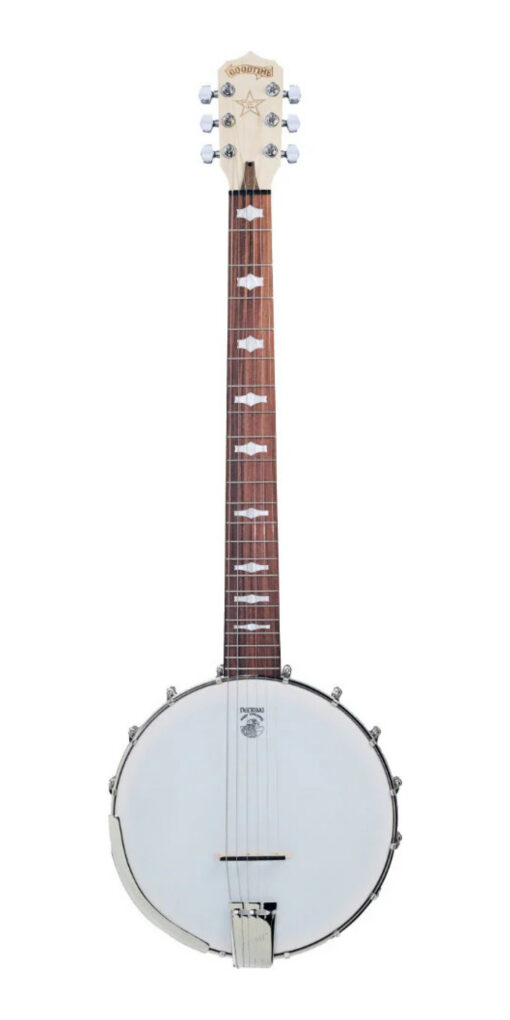
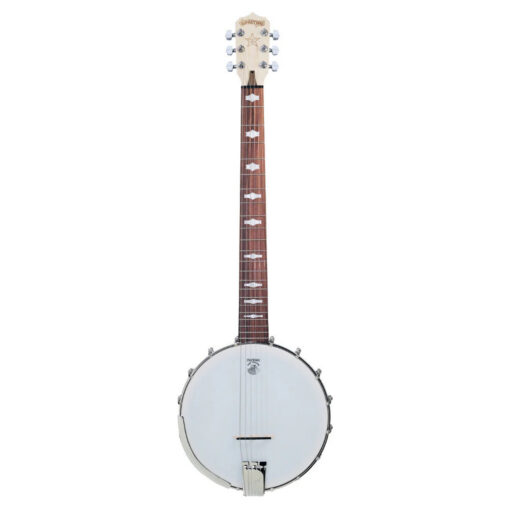
The Deering Goodtime Six is a 6-string, steel-string banjo that tunes like a guitar. Handcrafted in Spring Valley, California. Maple fingerboard, 3-ply violin grade maple rim, comfortable guitar-style neck. $899 with free shipping and professional setup by our banjo tech Tara. Made in the USA.
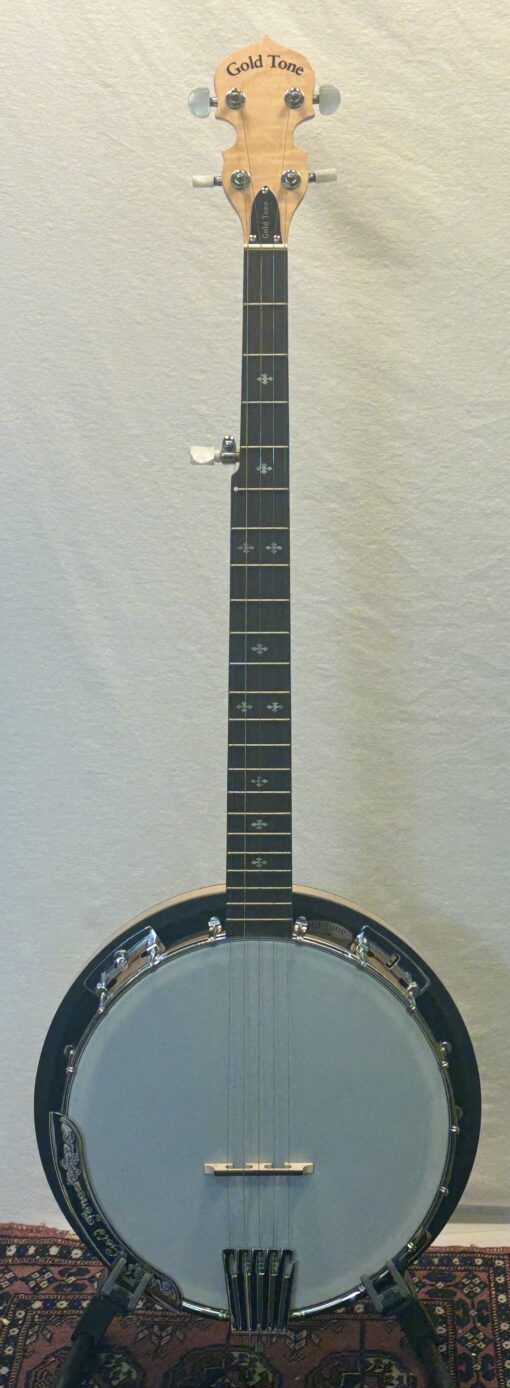
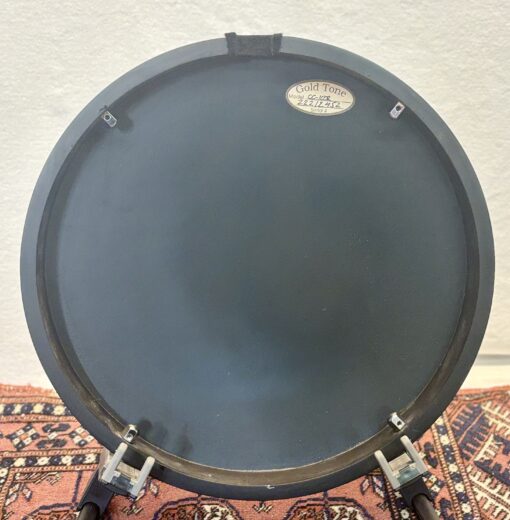
The Gold Tone CC-100R is the best beginner banjo at this price. Maple neck and rim, rolled brass tone ring, two-way adjustable truss rod, and a convertible resonator/openback design. Professionally set up at Banjo Warehouse in Yellow Springs, Ohio. Gig bag included.
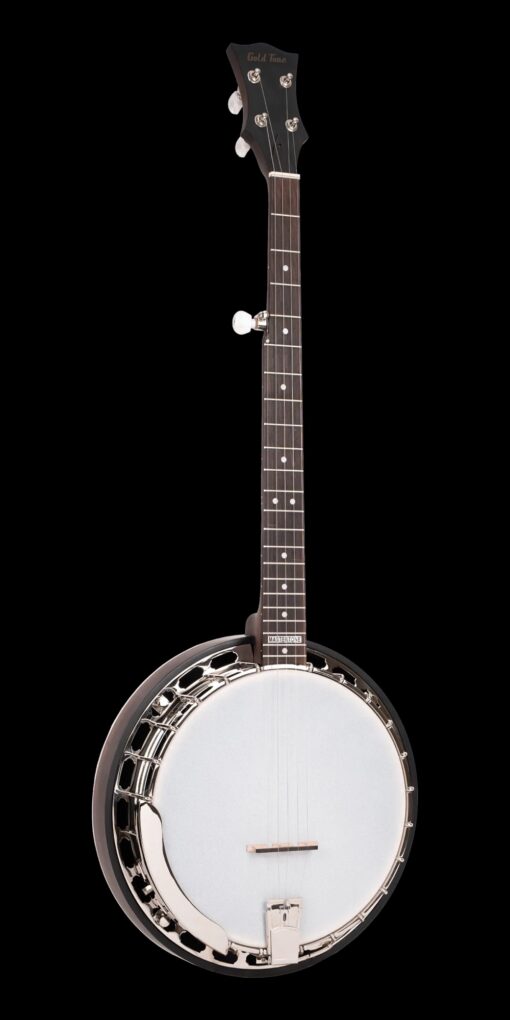
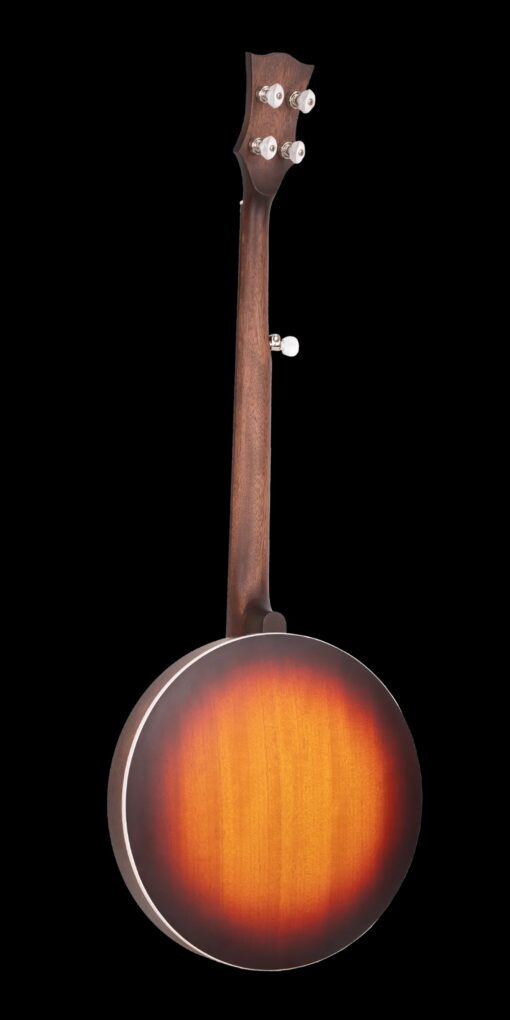
On backorder, more on the way. This model is temporarily sold out at Gold Tone. Order now to reserve yours at today's price and hold your place in line. It ships as soon as our next shipment arrives, expected in August or September 2026. Questions? Call us at (404) 218-8580.
The OB-100 is a lightweight RB-100 tribute with rolled brass tone ring, one-piece flange, and classic styling. Just 8.2 lbs. Greg Rich design.
Reviews
There are no reviews yet.